

Federal Government Likely Heading for Weekend Shutdown, but With Hope on the Horizon. At the time of this writing, the U.S. Senate has not passed legislation to fund most of the federal government beyond 11:59 p.m. (EST) this evening. Just a few days ago, Congress was on the glide path to do so, but as the Buzz noted last week, “Politics can always derail efforts at the last minute.” And this is exactly what happened in the Senate this week. Before leaving Washington, D.C., last week, the U.S. House of Representatives sent the Senate a six-bill funding package that needed to be passed to keep the government open. But part of the package included a bill funding the U.S. Department of Homeland Security (DHS), and Senate Democrats wanted to make changes to that bill following the killing of a U.S. citizen in Minneapolis this past weekend. The hopeful outcome at this time is for the passage of a revised spending package that includes the five non-controversial bills and a two-week continuing resolution of DHS funding. (The Senate is currently voting on such a spending package.) In this scenario, there will likely be a brief partial government shutdown until the House can agree on these new changes and the president signs the bill.
NLRB: New Personnel, New Processes. Now that a functioning quorum has been restored at the National Labor Relations Board (NLRB) and a general counsel, Crystal Carey, is in place, the new folks in charge are digging into the enormous backlog of cases at the agency.
- On January 28, 2026, NLRB General Counsel (GC) Carey issued a memorandum titled, “Operational Priorities to Ensure Consistent, Fair, and Timely Case Resolution Across Regions”—her first publicly released memorandum since assuming the role. Traditionally, the first memorandum issued by a newly minted GC at the Board instructs regional offices to submit to the GC’s office cases or topics that are controversial or that the new GC might want to reconsider. According to Carey’s memo, however, her “priority is to address the backlog of cases, not add to it.” Consequently, the memo further states that Carey will soon “issue guidance on operational focused topics such as case processing, settlements, and remedies all aimed at achieving consistent, fair and prompt resolution of charges across the Agency.” While the GC and the Board work to resolve the backlog, existing Board law will remain in place.
- Speaking of the case backlog, this week, the Board issued a clarification responding to media reports of changes to its internal docketing protocol. According to the clarification, under the old intake system, Board agents received new charges with “incomplete information and were required to conduct extensive follow-up before any evidence was collected or meaningful investigative steps could occur.” Under the new protocols, “essential information is collected at the time the charge is filed, … [so] … [w]hen a Board agent reviews the case for the first time, there will already be an organized body of evidence ready for review.” The Board’s clarification further states, “The purpose of the new internal protocol is to improve efficiency and reduce delays caused by assigning cases to Board agents who are already managing significant caseloads and may not be able to begin new investigative work for months.” Eric C. Stuart and Zachary V. Zagger have additional details.
EEOC Commissioners Recoup More Litigation Authority. The U.S. Equal Employment Opportunity Commission (EEOC) has approved a “Resolution Concerning the Commission’s Authority to Commence or Intervene in Litigation.” The resolution addresses an issue that has been the subject of debate at the Commission for decades: the interplay between the commissioners and the EEOC’s general counsel with regard to enforcement of federal antidiscrimination laws. Title VII of the Civil Rights Act of 1964 provides the Commission with the authority to file civil actions where an employer or labor organization has engaged in an unlawful employment practice, while empowering the Commission’s general counsel to conduct such litigation. Beginning in 1995, the Commission took several steps to delegate its statutory enforcement authority to the general counsel. This eventually led to complaints that the Commission had ceded too much of its authority to the general counsel. In early 2021, during the final days of the first Trump administration, the EEOC passed a resolution that returned much of this delegated litigation authority to the Commission. As a result of the most recent resolution, the commissioners will now vote to approve all cases, except those involving recordkeeping, consent decrees, or settlements.
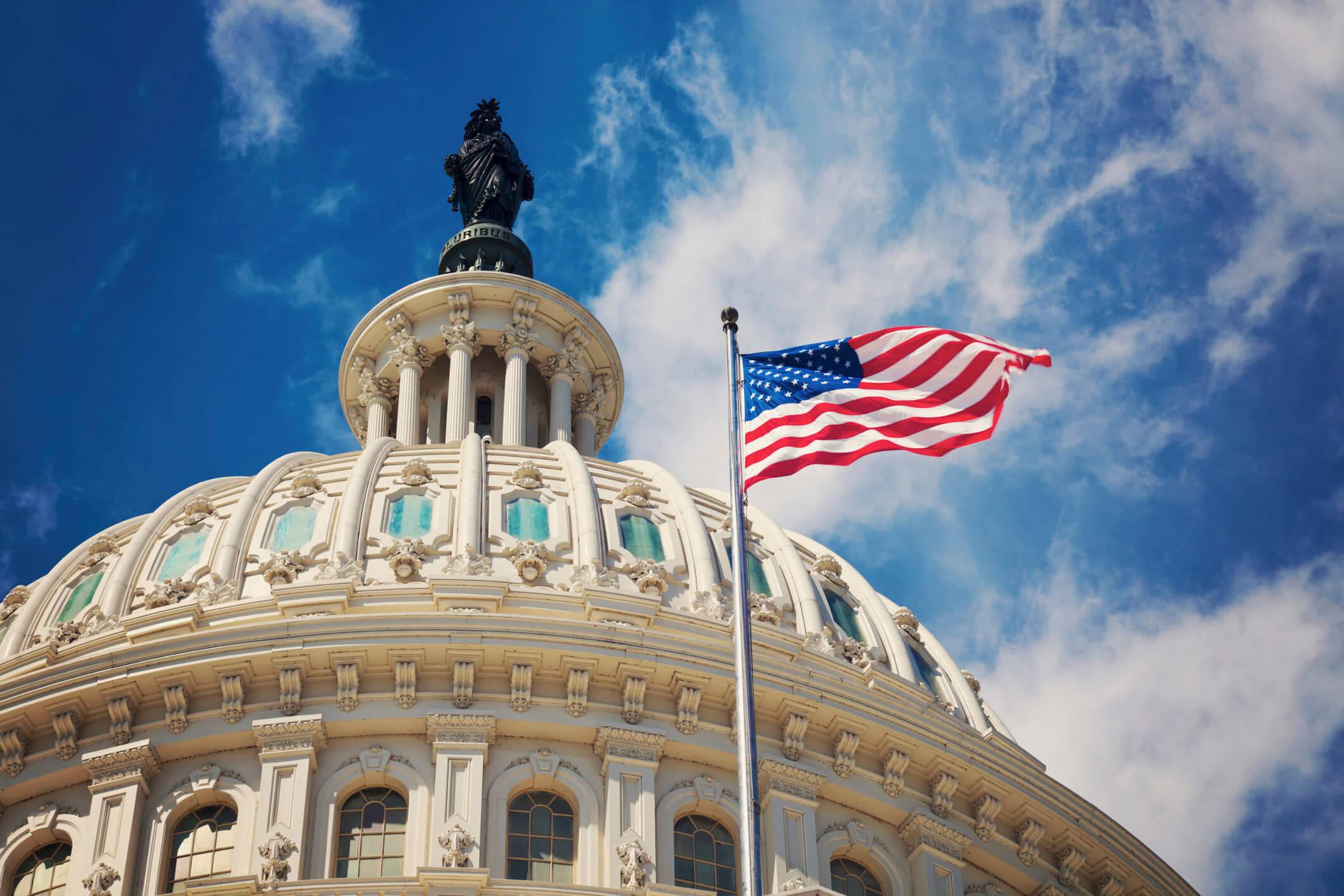
Snow Way. Labor and employment attorneys are not the only stakeholders watching Congress sort through the federal government’s funding process. Washington, D.C.–based snow lovers have had a keen eye on the process, as well. Here’s why. The west front of the U.S. Capitol is a great spot for sledding in D.C.’s otherwise urban landscape. However, §16.5.20 of the United States Capitol Police’s Traffic Regulations for the United States Capitol Grounds states, “No person shall coast or slide a sled within Capitol Grounds” (though cross-country skiing or snowshoeing is allowed on the grounds “as a means for transportation”). Fortunately, Delegate Eleanor Holmes Norton (D-DC), the non-voting delegate to Congress representing the District of Columbia, has been able to insert language into the report accompanying the appropriations bill funding the legislative branch that encourages the Capitol Police to permit sledding. The language states:
Use of Grounds. As instructed in House Report 117-389, the USCP should continue to forebear enforcement of 2 U.S.C. 1963 and the Traffic Regulations for the United States Capitol Grounds when encountering snow sledders on the grounds.
This item was included in the legislation that President Donald Trump signed into law on November 12, 2025, to end last year’s federal government shutdown.