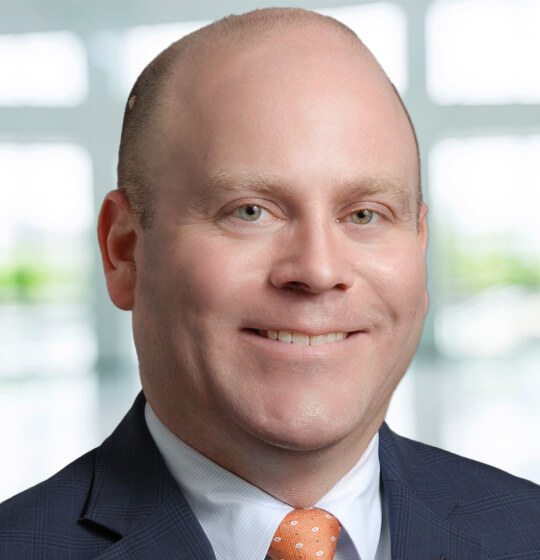
Noem Out, Mullin In (Maybe. And Certainly Not Yet). On March 5, 2026, President Donald Trump removed Kristi Noem from her position as secretary of homeland security and reassigned her to be “Special Envoy for The Shield of the Americas,” a new global security initiative. President Trump further announced on social media that Senator Markwayne Mullin (R-OK), would assume the role of secretary of homeland security, “effective March 31, 2026.” Of course, because the secretaryship is a Senate-confirmed position, neither President Trump nor Mullin controls his Senate confirmation date (if he is confirmed) and subsequent swearing-in. Further, neither the Federal Vacancies Reform Act nor the Homeland Security Act of 2002, the latter of which provides a specified order of succession in the absence, disability, or vacancy of the secretary or deputy secretary of homeland security, would permit Mullin to simply be appointed the “acting” secretary of homeland security.
Invalid appointments at DHS were found to have occurred on multiple occasions during President Trump’s first term. For example, in September 2021, a federal district court invalidated an attempted precursor to the current H-1B weighted selection rule because it was approved by an acting homeland security, Chad Wolf, who was found to have been unlawfully appointed. Earlier, in 2020, the Government Accountability Office had found that, in addition to Wolf, Kevin McAleenan had been unlawfully named as acting secretary, and that Ken Cuccinelli had unlawfully been appointed as the “Senior Official Performing the Duties of Deputy Secretary.”
All of this is to say that simply becoming secretary of homeland security (or even “acting” secretary of homeland security) by a specified date is not as easy as it sounds.
H-1B Cap Season Begins. The fiscal year 2027 H-1B cap season has begun, as the initial registration for the selection process opened at noon ET on March 4, 2026. This initial registration period will close at noon ET on March 19, 2026. Of course, this year, U.S. Citizenship and Immigration Services’ new weighted selection rule will control the lottery process. Additionally, covered sponsoring employers of H-1B workers may be subject to President Trump’s Presidential Proclamation No. 10973, “Restriction on Entry of Certain Nonimmigrant Workers,” which set a $100,000 fee and is the subject of three ongoing legal challenges.
NLRB GC Memo Addresses Enhanced Remedies, Workplace Rules. On February 27, 2026, National Labor Relations Board (NLRB) General Counsel Crystal Carey (GC) issued a memorandum providing guidance to regional offices on “best practices, settlement considerations, and investigatory procedures in unfair labor practice cases.” The memo builds on Acting GC William Cowen’s rejection of former GC Jennifer Abruzzo’s expanded remedies approach, stating, “Enhanced remedies—such as notice readings, apology letters, or nationwide postings—should not be routinely included in settlement agreements or complaints.” The memo goes on to note that pursuing cases “based solely on the maintenance of potentially unlawful rules, without any concurrent allegation of enforcement or evidence demonstrating actual impact on employees … is not an efficient use [of Board resources].” Immediate policy changes at the Board are unlikely to transpire anytime soon, due to the current case backlog and a lack of a third affirmative vote to overturn extant Board case law. However, with this memo, GC Carey has sought incremental changes that will impact parties to Board proceedings.
EEOC Decision Changes Course on Federal Transgender Employee Bathroom Use. In a federal case issued on February 26, 2026, the U.S. Equal Employment Opportunity Commission (EEOC) reversed its position regarding the application of Title VII of the Civil Rights Act of 1964 to transgender federal workers’ access to single-sex spaces that correspond to their gender identity. In Selina S. v. Driscoll, the Commission dismissed a complaint alleging that the U.S. Army had discriminated against a transgender civilian employee by denying her access to a bathroom that aligned with her gender identity. The Commission majority wrote that Title VII “permits a federal agency employer to exclude employees, including trans-identifying employees, from opposite-sex facilities.” The 2–1 decision reverses the Commission’s 2015 ruling in Lusardi v. Department of the Army. Although not applicable to private-sector employers, the ruling in Selina S. v. Driscoll demonstrates that the issue of same-sex spaces is a priority for the Commission. T. Scott Kelly, Nonnie L. Shivers, and Zachary V. Zagger have the details.
EEOC Chair Reminds Employers of DEI-Related Responsibilities. In a letter dated February 26, 2026, EEOC Chair Andrea Lucas reminded Fortune 500 companies of the “EEOC’s technical assistance documents addressing race and sex-based discrimination in employment that may result from a company’s so-called diversity, equity, and inclusion (DEI) policies, programs, or practices.” These technical assistance documents include a one-pager, “What To Do If You Experience Discrimination Related to DEI at Work,” as well as a document titled, “What You Should Know About DEI-Related Discrimination at Work.” The letter further reminds companies of the Commission’s enforcement capabilities, noting, “In October 2025, the Commission regained its quorum, empowering it to bring all types of cases in federal court, including systemic cases; pattern and practice lawsuits; and other large-scale litigation.” The letter is further evidence that scrutiny of employers’ diversity, equity, and inclusion programs remains a priority for the Commission.
Getting to Know Senator Mullin. The aforementioned Senator Markwayne Mullin is likely well known to Oklahomans, but perhaps not to Buzz readers. Below is a quick background on Senator Mullin:
- Mullin is a member of the Cherokee Nation and only the second member of the Cherokee Nation to serve in the U.S. Senate. One of the first two senators to represent Oklahoma—Robert Latham Owen Jr.—was also a member of the Cherokee Nation. He served in the Senate from 1907 to 1925.
- Mullin is the first Native American to serve in the Senate since the late Ben Nighthorse Campbell of Colorado (1933–2025) retired from the Senate in 2005.
- Mullin is one of two current U.S. senators without a bachelor’s degree. (Senator Rand Paul [R-KY] left Baylor University before obtaining his bachelor’s degree to enroll in Duke University School of Medicine, which did not require a college degree at the time.) Of course, no one needs a bachelor’s degree to be successful. Prior to becoming a member of the U.S. House of Representatives and the Senate—successes on their own, to be sure—Mullin operated multiple successful family businesses.
- Between 2006 and 2007, Mullin fought in three professional mixed martial arts (MMA) matches. He went 3–0, winning one by technical knockout, one by armbar submission, and one by a “rear-naked choke” submission.
- In 2023, Mullin threatened to use his MMA skills when he challenged Teamsters President Sean O’Brien to a fight during a Senate committee hearing. The two potential pugilists have since made up and are perhaps a bit cozier than management-side labor policy watchers would prefer.
Assuming Mullin goes through the normal confirmation process, his nomination hearing will be before the U.S. Senate Committee on Homeland Security and Governmental Affairs, chaired by Senator Paul. Mullin previously called Paul a “freaking snake.”