


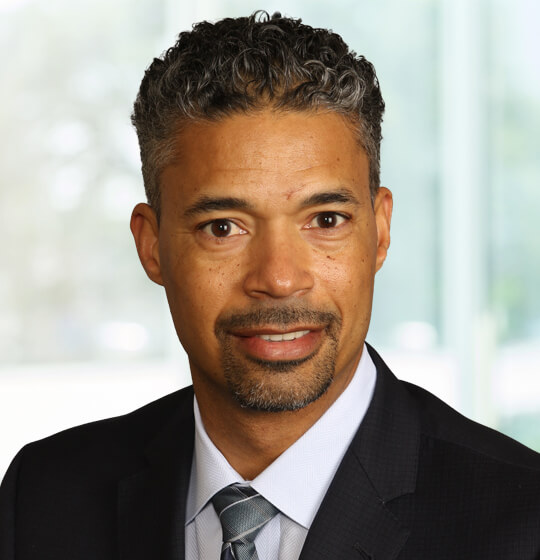
As social and political expression in the workplace grows more charged, employers face mounting pressure to set clear boundaries—and enforce them consistently. In this installment of our Workplace Strategies Watercooler 2026 podcast series, shareholders Brandon Shelton (Charlotte/Indianapolis), Mike Bell (Denver/Dallas) and Virginia Wooten (Charlotte) explore the legal framework governing employee speech, the risks that come with inconsistent policy enforcement, and what in-house counsel and HR professionals need to know in today’s polarized environment. Listeners will come away with practical guidance on policy design, manager training, and how to respond when personal beliefs and workplace expectations collide.
Home > Insights & Resources > Podcasts > Workplace Strategies Watercooler 2026: Managing Social and Political Expression in the Workplace
Workplace Strategies Watercooler 2026: Managing Social and Political Expression in the Workplace
0:00:00
0:00:00


Transcript
Announcer: Welcome to the Ogletree Deakins podcast, where we provide listeners with brief discussions about important workplace legal issues. Our podcasts are for informational purposes only and should not be construed as legal advice. You can subscribe through your favorite podcast service. Please consider rating this podcast so we can get your feedback and improve our programs. Please enjoy the podcast.
Brandon Shelton: Hello, my name is Brandon Shelton. I’m a shareholder with Ogletree Deakins based out of the Charlotte and Indianapolis offices. And I am here today with Virginia Wooten out of our Charlotte office and Michael Bell out of Denver. We have the pleasure of presenting at the Workplace Strategies conference here in Austin, Texas. And the topic that we’re going to be discussing today is when personal beliefs come to work, managing social and political expression. Now, things are crazy out there right now. Most of us have seen a lot of the stats showing that a lot of our workforce lives a lonely, isolated life combined with being constantly exposed to a lot of political material, social commentary. And so the result of that is for a lot of our workforce, their primary opportunity to have discussions about things that they’re exposed to, opinions that they have is when they come into work and that can present challenges for employers on a wide variety of fronts.
So, I’m really looking forward to this discussion today with our panel to kind of talk through different ways to help employers navigate that. So, let’s start off with you, Mike, in terms of…tee us up, what’s going on out there?
Michael Bell: We saw this really come to a head last year when we had one of the biggest news stories of 2025 was the murder of Charlie Kirk. And in the wake of that, there were a lot of comments being made, many of them very controversial pertaining to that by employees around the country. And we saw in response to that, a call for action from customers, from other employees, from the public, from political leaders about trying to do something about that discourse. And is there an obligation when an employer becomes aware of that to take action against that employee to preserve the employer’s brand, to ensure there’s no harassment or hostile work environment in the workplace, a variety of reasons why you might need to take that action.
And because of that pressure, we had a lot of employers asking us, “Can we do that? Well, what are the limitations on our ability to take action when somebody’s engaging in speech that can be viewed as controversial or potentially even damaging to the work environment and the employer’s interest?” And so, we have had to give that advice and look into exactly what laws are impacting that and how do we guide employers when they’re having to deal with that. Right, Virginia?
Virginia Wooten: Exactly. And even the more recent surveys have found that political discussions are on the rise in the workplace, they’re becoming more heated. And there’s a recent survey last year from Resume Now that came out and basically found that 91% of employees have observed or experienced an actual political clash at work, and also 81% say the workplace has become more tense in general. And this is also reflected in the fact that the political discussions themselves are just becoming more heated and more intense. So, 75% of the employees that were surveyed came back and said, “Hey, we have these political discussions. They’ve just really increased in intensity over the past couple years.” And on top of that, 90% of the employee surveyed also said that they’re worried about political bias in the workplace. So, they’re worried their employer is making decisions about their job opportunities based on political bias as well.
So, really can have a detrimental effect on employee morale and employee collaboration. And one of the more striking findings from these surveys was that 51% of the employees actively avoid working with other employees with differing views. So, talk about a killer when it comes to team collaboration, right? That’s not going to be helpful for your team and teamwork in general. The other alarming thing that I found in looking into this issue is that I think over 50% of HR professionals feel like they’re not prepared to handle these issues when they come up. So luckily, you’re tuning into this podcast, you’re getting some good advice, you’ll know how to handle it as it comes up and arises. And Brandon, I’ll turn it over back to you for some more commentary on employees engaging in political speech.
Brandon Shelton: Well, I think there’s a lot to consider, right? Things that when clients call with questions like this in terms of walking them through how to analyze is like, all right, what do we need to consider? And that can be the type of speech, the timing, and the location of the speech. And one of the things that I like to walk clients through is, well, if you take whatever the issue, whether it’s political or social, take that out of the equation and let’s just focus on not so much what’s being said sometimes but how it’s being said. When you talk about types of speech, right? Is it verbal? Is it nonverbal? For example, like buttons, hats, T-shirts can take on a whole life of their own, right? And is that objectively offensive on some standard outside of whatever the political and social is in terms of what’s being expressed?
You can also have workplace issues regarding social media. Post, comments, and all that that take place outside of work can directly impact or address what’s taking place at work. And so that’s something you need to look at. For example, if someone were to make a post or engage online about something that objectively violates, say, our workplace harassment policy and their coworkers with peers at work, and then the discussion of that comes into workplace, well, that can trigger a variety of obligations and issues in terms of complying with Title VII and other statutes. But then there’s also the timing for people to look at. And for example, was the commentary, was the discussion at work? Did people miss work to engage in some kind of activity, whether it’s a protest or strike? It reminds me of a situation I had where I was at a deli not too long ago and there was this long line of people waiting to get sandwiches made. And they were clearly understaffed.
And while we’re waiting, this guy comes walking in behind the counter throwing on an apron, and I saw his coworkers look at him like, dude, where you been? And he said, “Well, I was online arguing about politics with someone.” They rolled their eyes, he got to work, sandwiches were made, but the reality is that is out of work activity that’s having a direct impact on what’s taking place during work hours. And then you also get into the location of the speech. Is someone making commentary or engaging in behavior, whatever it is, on their own time with no correlation to work? Are they doing it on company property? Are they participating in a protest outside of work? But as we start to form a factual basis to give guidance and decisions, looking at the practicalities of the who, what, when, where, why, and how is a good starting point.
Michael Bell: Yeah. And a big piece of that where is specifically what state are we dealing with? Because this is very much a situation of federal law being silent on these issues. There’s not very clear…there’s some that are implicated that I think Virginia can talk about, but really when it comes to taking potentially adverse action against employees for engaging in political speech, either in or out of the workplace, it’s really a patchwork of state laws that are implicating it. And it’s not really always the ones you think. I mean, there’s the usual suspects, for example, that have laws protecting political activity or political expression, California, New York, Illinois, ones you might expect, but there’s also states like South Carolina, Tennessee, Wyoming. Maybe it’s arising out of a different sociopolitical fabric and different set of values, but coming to the same conclusion that this is actually in some ways protected activity that you may be limited in what you can do as an employer when you’re having to deal with somebody making controversial statements of a political nature.
And then you’ve even got some states, including Colorado, the one where I practice, that protects lawful off-duty conduct, even if it’s not political in nature. And even that set has some funny bedfellows. You got Colorado, but you also have California and you also have Montana of all states that have those kind of protections. And generally speaking, that’s what you’re having to deal with. So, there’s not a one size fits all answer for can an employer take this action? It’s, where are they? What exactly is being said? What’s the motivation behind it being said? And the motivation behind it being said is where we see federal law come in sometimes because if somebody is advocating for better working conditions or somebody is using that controversial speech to oppose potential discriminatory treatment, then that could maybe arise even to protection under the federal laws, right?
Virginia Wooten: Exactly. And there’s some what we call federal conundrums here as well. One of the first ones we’ll talk about is just the NLRA or National Labor Relations Act. And why is that a conundrum? Well, it’s because purely political speech or expression is not protected, but where it gets blurry is if workers can connect it to some type of working condition, whether that’s wages, benefits, hours, something along those lines. A good example of that was the recent May Day protest that happened on May 1st. You had some employees who were walking out of the job protesting for political reasons, but it wasn’t clear if it was purely political or not, right? Because they may be taking a stand against government agencies or government officials and their decisions, but at the same time, they have slogans like, “Workers over billionaires,” and things that might implicate wage increases, working conditions that would be protected under the NLRA.
So, really wish I could tell you guys there’s black and white line to distinguish when it’s purely political or not, but there’s really not. It’s a fact-specific kind of investigation that you have to do to figure that one out. The other area is probably Title VII that we want to talk about, especially when it comes to religious protections. And where that gets tricky is obviously under Title VII, religious expressions are protected from discrimination and harassment, that type of thing. But what if that political or religious expression is creating a hostile work environment and when does that line occur?
So take, for example, you have an employee who’s espousing some of their religious beliefs. Well, what if they’re espousing about their religious beliefs on abortion or birth control in the workplace? You have other employees who have told them, “Hey, please don’t talk to me about this. I don’t want to hear it.” The employee continues to do so in the workplace. At what point does that create a hostile working environment for other employees, and at what point is that protection of the religious speech eroded? So really murky issues, really easy things for employers to deal with here, but luckily you have us if you ever need us but just shows you how gray and murky these issues can be.
Michael Bell: And I guess it depends a lot too on what kind of employee are we talking about here that’s making these statements? Is it a rank-and-file employee? Is it a member of management? Is it an executive? And is the commentary that they’re making commentary that actually can damage business relationships and damage the work environment? Or is it an employee that is less capable of doing that? And that will impact not only whether or not you want to take action, but potentially whether you can take action with respect to that employee.
Brandon Shelton: I think that’s a good point. And I think this is probably a good opportunity to transition just to some hypotheticals to help walk people through to give some examples. They can start seeing the framework and examples and to help navigate this.
Virginia Wooten: Yeah. Yeah, I agree. So, let’s talk about the first scenario. So, we have an employee who reports to work wearing a MAGA T-shirt, violates the dress code. How are we going to handle that? I think the first thing we probably look at is what does the dress code actually say. Yeah. Is it a neutral dress code that applies to all political type speech? Is it targeting, singling out something? And is it clear and enforceable? Is it something you’re going to be able to stand behind if you take disciplinary action? And then also have you been consistently enforcing that policy? If you’re doing this for a MAGA T-shirt, are you doing the same thing if somebody comes in with BLM T-shirt, Free-Palestine T-shirt, Back the Blue T-shirt? So really need to look at consistency across the board as well.
Michael Bell: For sure. Yeah. I mean, policies are great and they should be neutral in terms of application, but the proof is in the pudding and how it actually works out because then you could find yourself not only in a state law conundrum, but then it’s just a…if that individual that you are enforcing the policy strictly against happens to be of a certain demographic group and then somebody who’s not getting the strict enforcement is of a different one, there’s your definite disparate treatment lawsuit waiting to happen, just like any other type of racial or sexual or ageist disparate treatment type of lawsuit.
Brandon Shelton: As the labor lawyer on the panel, I feel compelled to chime in here. When it comes to enforcing policies, start with the review of the policy, making sure it’s up to date in terms of the current guidance coming from the National Labor Relations Board. I suspect that we’re going to start seeing more general council memos providing a little more clarity and a little more leeway in terms of policies. But for those of you who looked at your policies within the last few years, you know that there is a lot of guidance and direction where we had to really tame down some of our policies to get them in compliance with the position that the board was taking in the last few years.
Virginia Wooten: Another scenario to bring up. So, scenario two, employees with divergent political views get into a heated profanity-laced argument on a break. So, what are we doing? What are we thinking about here? Well, this sounds like it’s a really heated argument. Is this to the point where these employees are threatening each other? Would it implicate workplace violence policies, things along those lines? And one of the issues too that I want to bring up and point out for you guys, it’s more of a practical issue, but who’s actually responding to this incident? It’s likely going to be your local supervisor or local manager. It’s not going to be your HR personnel or your in-house counsel that’s breaking this one up. So, you want to make sure you have your local managers trained on how to respond to these types of incidents as well.
Michael Bell: Yeah. And then the key with that one, I think, is that there often is no very clear answer in how to handle these. And in that particular instance, you’re dealing with, okay, individuals trying to engage in a political discussion and trying to exercise those rights, but at the same time, potentially it’s implicating a workplace violence policy. So, as an HR professional especially, I think your job is to recognize the different risks that could be at play, have discussions with management about how to handle those. And a lot of times you’re picking what you think presents the least amount of risk profile and what’s going to be the appropriate way forward. Here it might be, we’re more concerned about the workplace violence aspect of this than a potential claim that could arise out of limiting these viewpoints being expressed.
Virginia Wooten: One more scenario for you guys. So, scenario three, we have an employee who posts a picture of himself on a social media platform in a shirt with your company’s logo and a Free Palestine banner and likes a post that’s praising a Hamas attack. So how do we handle this one? This is a little bit of a tricky one, I think. So first of all, Mike brought up that there’s some state laws about what you can do with off-duty political commentary. So, you got to be aware of those. Are you in one of those states? Is that going to be applicable here? But then what are you actually disciplining this employee for? Do you have a social media policy where you tell employees, “Please don’t post on personal accounts with company logos or otherwise”? Was that violated? Is a code of conduct violated here because the employee’s praising a violent attack? Have other employees seen this and do they feel threatened by it as well? So, is there potential for violating a code of conduct and something along those lines?
Michael Bell: Right. And what level is that employee? What is that employee’s set of job responsibilities? Is this somebody who’s in charge of developing a certain customer base that’s going to be adversely affected by commentary like that? So those are considerations even in states where you do have lawful off duty activity protections. There are usually in those states, some sort of exceptions built in for can we show that the only reason we’re taking an action here is because there’s a conflict of interest or it’s something that is really antithetical to the company’s values or what this employee’s job responsibilities actually are and prevents him or her from discharging those responsibilities effectively. So those are the kind of considerations you need to think about, but you do have to think about those considerations even when it is conduct that is entirely outside the workplace.
Brandon Shelton: Really appreciate you all providing these examples and some context to help companies navigate this. Let’s just wrap it up with covering a few best practices. Number one, I heard you all because I was listening to you all, it came down to number one, determine what a law applies to you. That could be state or federal. And then in terms of our policies, make sure that we’ve looked at our policies and we’re limiting our policies to legitimate business needs. As issues arise, address and document them from a fact-based as opposed to an emotional-based basis. And then in terms of our policies, making sure consistency, consistency, consistency. An audience of HR professionals probably don’t need to have that preached into them, but we see it not happen enough that it bears repeating. And then also reassure employees of their right to have views because I think it’s just a reality that for a lot of our workforce, they’re most likely to engage with another human being within the four corners of the room that they’re working in on a day-to-day basis.
And then develop and communicate a political speech strategy. This is not one of those issues that if you ignore it, it’s going to go away, especially as we’re going into a midterm election as the political and social environment combined with social media creates more tension, more information, more topics to discuss. It’s not a matter of if, it’s a matter of when this takes place at work. But then also with so many of these things, train your managers, train them on how to handle situations, how to recognize things like protected concerted activity. Train them on how to de-escalate situations. Taking those steps and implementing those best practices is going to go a long way in not only preserving culture but then minimizing potential liability exposure down the road. So, thank you both for this discussion and really, it’s a privilege to do this with you.
Michael Bell: Thank you. Thanks, Brandon.
Virginia Wooten: Thanks, Brandon.
Michael Bell: Thanks, everybody.
Announcer: Thank you for joining us on the Ogletree Deakins podcast. You can subscribe to our podcast on Apple Podcasts or through your favorite podcast service. Please consider rating and reviewing so that we may continue to provide the content that covers your needs. And remember, the information in this podcast is for informational purposes only and is not to be construed as legal advice.


Topics
Share Podcast



Practice Group
Employment Law
Ogletree Deakins’ employment lawyers are experienced in all aspects of employment law, from day-to-day advice to complex employment litigation.