


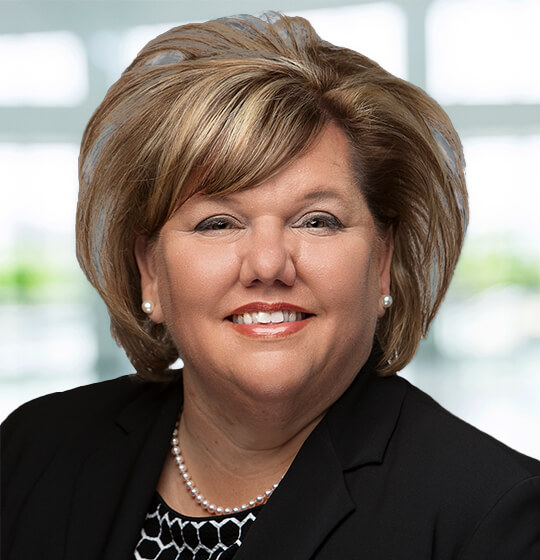
In this podcast recorded at our recent Corporate Labor and Employment Counsel Exclusive® seminar, Nonnie Shivers (office managing shareholder, Phoenix) and Scott Kelly (shareholder, Birmingham) discuss the rapidly changing and increasingly complex legal landscape surrounding diversity, equity, and inclusion (DEI) initiatives, focusing on recent enforcement trends and guidance from the EEOC and U.S. Department of Justice. Scott, who is chair of the firm’s Workforce Analytics and Compliance Practice Group and Government Contracting and Reporting Practice Group, and Nonnie, who is co-chair of the firm’s Diversity, Equity, and Inclusion Compliance Practice Group, provide insights into new priorities, enforcement actions, and practical considerations for employers navigating DEI compliance, including the risks of rebranding or modifying programs without addressing underlying legal concerns. The conversation highlights the importance of understanding both current and emerging legal frameworks to effectively manage risk and opportunities in workplace DEI efforts.
Home > Insights & Resources > Podcasts > Inside the Exclusive: DEI Developments: What Every Employer Needs to Know
Inside the Exclusive: DEI Developments: What Every Employer Needs to Know
By T. Scott Kelly and Nonnie L. Shivers
0:00:00
0:00:00



Transcript
Announcer: Welcome to the Ogletree Deakins podcast, where we provide listeners with brief discussions about important workplace legal issues. Our podcasts are for informational purposes only and should not be construed as legal advice. You can subscribe through your favorite podcast service. Please consider rating this podcast, so we can get your feedback and improve our programs. Please enjoy the podcast.
Nonnie Shivers: Welcome everyone. I’m Nonnie Shivers from the Phoenix office, and I’m joined by Scott Kelly from our Birmingham office. We’re here in beautiful Colorado Springs, at the Corporate Labor and Employment Counsel Exclusive. You’ve got to come next year. It’s going to be an amazing program just like this one. Scott and I are here today to recap some of our discussion on “unlawful diversity, equity, inclusion” enforcement activity, both from the Department of Justice and the EEOC, as well as some other shmatterings. Nice to have you here today, Scott.
Scott Kelly: Thanks for having me. I’m glad we’re able to talk. We haven’t gotten together to talk about some of the recent updates we’re seeing from these enforcement agencies. Do you want to start with the EEOC, or would you rather start with the Department of Justice?
Nonnie Shivers: Well, let’s start with the EEOC. Let’s kick off with the who before we get to the what. So, we know that Andrea Lucas has been confirmed, and that Brittany Panuccio, who’s the other nominee, will be confirmed in the next two to three weeks. So, in my opinion, Scott, but tell me yours, that’s going to change the look of enforcement, but we’re going to cover what’s come before, and we’re going to cover what we think is happening next. What do you think though? Going to change things?
Scott Kelly: I think it’ll change things. The question in my mind is exactly how fast we’ll see those changes. On one hand, I think they could be pretty fast. I mean, everyone, this administration has been relatively clear, and including Chair Lucas, on what her priorities are and how they line up with President Trump’s America’s first priorities. She didn’t like a lot of the things that we expect that she’s going to take action on, like the harassment guidance and some components of the pregnancy guidance, as well. So, those are areas that we’re watching and would expect action.
It’s interesting. I was talking with Jim Plunkett a little bit earlier today, trying to get an idea from his kind of inside the beltway experience and intel on how fast he thought we might see some of these changes. His thought was that he wasn’t quite sure, that we definitely feel that it could be swift, but this just can’t happen overnight. The office, the chairs of the commission’s office, has to work to make a lot of this stuff happen. And she has a relatively new staff. She’s gotten a lot of people in from outside the government, with folks from Fox News and different places joining. So, it’ll be interesting to see if those people help advance what I think is the inevitable, which will happen certainly before the end of the year, which is a change to some of the guidance in those areas.
Nonnie Shivers: And I think, in terms of how fast got my two cents as Carnac the magnificent with my crystal ball, is that much of this change that we’ve seen that will go from technical assistance or something similar is going to becoming hot and heavy. I speculate that this is already in the works, and that’s my glass-half-empty approach that we will see pretty swift movement. Of course, even with a quorum, that releases the EEOC not just to file the commissioner’s charges we’ve been seeing or hearing about more aptly, and law firm letters and law firm light letters, but we’re going to see those lawsuits, but that is going to take some time to get it rolling.
One development that we’ve seen in the enforcement space is that Chair Lucas has directed, consistent with her priorities and the President’s, that the district offices will identify cases that align with those priorities. Now, typically, the EEOC has the strategic enforcement plan and follows that. This is a pretty significant deviation, but also not surprising. So, if any employers listening have cases that will follow along those enforcement avenues, be prepared that you may be on that top 10 list, and those are being tracked by the chair and being moved forward.
The other thing I’ll tell you, Scott, and I don’t know if you’ve seen these, but we’re tracking them pretty closely. Scott and I have told you many a time on our webinars and other types of settings that you should be following the enforcement agencies and their leadership on social media. I’ve been following Chair Lucas’s recent interviews and socials. Have you been following those too, Scott? Anything you want to offer before I give you some of the quotes that I’ve selected that might tell you where her enforcement is heading?
Scott Kelly: I’m actually interested in what quotes you’re going to share, so go for it.
Nonnie Shivers: Yeah. So interestingly, they hired, at the EEOC, a communications officer it appears, who comes from Fox News. And so, they’ve made it a priority to talk to what are being typified as conservative outlets, publications you may or may not read. I can’t speak for that. I track those and look at those carefully as to where is enforcement heading.
So, here’s what Chair Lucas said very recently. So, on August 20th, in an interview, she called out corporations and said, “You don’t get to memory hole what happened between 2020 and 2024,” so really looking at activity after the murder of George Floyd and what corporations were engaging in. She then called out companies in an interview around the same time in September and said, “Companies, not the government, are driving the ‘DEI insanity.’ And the EEOC stands prepared to ‘use Title VII to correct it.’”
And the targets of that, Scott, she’s looking at cultural movers. So, she called out consulting companies for the first time, hadn’t really seen that, and of course continues to have universities and others. But the idea of enforcement strategy right now that she is sharing very publicly is to focus on these, quote, cultural movers, and then you will see those changes that the universities are already making under pressure from the administration and these deals, or other organizations are then effectuating broader cultural change. So, changing how DEI, even if lawful occurs in other entities based on what these, quote unquote, cultural movers are agreeing to with the government.
So, I think we’re going to see a lot more of the same. I think we’re going to see more investigations. I think we’re going to see more lawsuits. And I think, pretty promptly, we’re going to see some actual guidance. Of course, we’re going to see some that’s DEI-related, but I wouldn’t be shocked if that technical assistance becomes more fomented guidance, things like that. So, I would definitely stand on the ready for more in the next two to three weeks immediately as a quorum is reached. All right. So, the EEOC, all good news there, right, Scott?
Scott Kelly: Yeah, all good news. Before we leave, I do want to give just…I spoke earlier today on a panel regarding the EEOC’s priorities, and I did a little bit of a deep dive. We’re a couple of weeks away from the end of the fiscal year for the government. And usually, after that, we’ll see federal agencies share stats and certain data-related things that I always find really interesting. Those are not available quite yet, but just by reviewing PACER and looking at different litigation that’s been filed by the commission since January, or either continued to be pursued by the administration since then, and also reviewing the EEOC’s newsroom, I would say that, while we’re talking about DEI, I don’t want employers to think that that’s the only focus of the EEOC. And in fact, we’re seeing that they have doubled down on what I would call the tried and true kind of traditional employment-related claims, but there is a heavy emphasis, I believe.
It’ll be interesting, once we get all the data to see if this bears out, but particularly related in disability discrimination, another one is the religious liberty or religious accommodation discrimination. Now, a lot of them, I would say, that I kind of dug into didn’t necessarily come into a nexus with “DEI,” but I do think we’re going to see more and more of that coming. It’s just, I think, something that employers might be lulled into thinking that it’s only the anti-DEI stuff that this commission is after. And I think that that would put you all in a bit of jeopardy. I think it’s a full-fledged, very active enforcement that we’re seeing of all the laws of Title VII and all the related issues that come from there.
Nonnie Shivers: I think that’s exactly right, Scott. And one of my predictions has been that we will see—similar to what we saw in the federal sector on religious rights and prioritization of those in the workplace—we will see some similar guidance coming out under Title VII for the private sector. So, standby.
All right. So, as you all know, Scott is our brightest mind on federal contracting issues. So, the Department of Justice certainly is active in this space as well, as is almost every other federal agency, the DOE, the FCC. No matter your sector or industry, you are a potential target, if you continue your inclusion belonging DEI programs under any name, especially if they’re in our riskiest pools of anything that looks, sounds, or smells like a quota, or anything that looks, sounds, or smells like preference. But the DOJ has had some unique enforcement developments as of late. So, one, the AG Guidance, the Attorney General Guidance that was issued on July 29th, and two, its civil investigative demands that have started to flow. Let’s start with the guidance, Scott. Is there anything that in terms of enforcement activity, we should know, having read the guidance and appreciated the four examples, the four main areas where they provided exemplars of what is considered unlawful DEI in that guidance?
Scott Kelly: Sure. So, I think it would just make sense to kind of hit those four examples kind of at a high level. We’re dealing, first, with any type of race-based preferencing. It’s interesting, there was a lot of talk in this guidance about race-based initiatives, not so much from a sex-based or gender-based. But in the race-based, it’s talking about scholarships. I think that can be extrapolated to any kind of admissions or mentoring or any kind of terms and conditions of employment that would have some relation to a race-based decision, or even a race being a plus factor in decision-making, which would fall…definitely, that’s something that they are saying is unlawful from the Department of Justice.
Nonnie Shivers: And one note on that, Scott, I’ve heard a couple of folks say, “Well, this guidance really relates to educational institutions.” We appreciate fully that higher ed in particular is at the forefront of this enforcement activity, but I wouldn’t rest on your laurels that this simply applies to the ivory tower. You should read this preferably and determine how it might apply in your sector, in your industry, at your company, reading it broadly, but also taking it that the EEOC is very likely to consider exactly the same issues. And even though described in a higher education setting, these are things that we see in private sector employment, right? So, I just wanted to note that as to some of these where you think, hey, it’s a Schadenfreude-esque moment where someone else’s issue. That’s not the case.
Scott Kelly: Absolutely. I think if you even think you get federal money, if it’s a cent or a quarter of a cent, this applies to you, and it’s something you need to be dealing with, particularly if you have been faced with a certification request under Executive Order 1473. I am seeing that, hearing that from different—there’s news reports all over. It seems like, every day, there’s a new article talking about how federal contractors or grant recipients are getting these things called civil investigative demands from the Department of Justice, which I know we can talk about here in a second. To maybe wrap up where the guidance really talks about unlawful behavior, the other three areas, in no particular order, dealt with training, and they talk about any training that is meant to discriminate against individuals, and I think the shortcut to that in the AG’s mind would be that divisive type of training that was part of Trump 1.0’s initiatives right at the end of his first term, or training that would create “a hostile work environment.” That does not mean all training, but it definitely would be prudent to review your training and make sure what you’re requiring is mandatory, fits within your risk tolerance and the law that—I’m going to steal Nonnie’s famous phrase that if you’ve listened to us before, you’ve heard her say—you really have to lean into the law. And I think it’s really important as you do that when you’re looking at this guidance. There’s not a ton of case citations in the guidance itself, and so, depending upon where you are, where your issues happen to be occurring, your risk might change or the law governing your activity could be a little bit different. So, there’s definitely a nuance here.
The other part of the guidance dealt with segregation, and that was not necessarily a big surprise to me. I don’t know about for you, Nonnie, but I think the one area that I have been working with clients a lot on since this guidance came out related to segregation would be dealing, how that might really translate into how you’re dealing with things like affinity groups or business resource groups, gatherings where you might only have certain genders invited or celebrations, making sure those are open to all. The same things that we’ve been talking about for several months, but I think it’s quite important. We’ve seen things not this, I would say, clear from the administration.
The EEOC, I believe Andrea Lucas, her position on what is unlawful DEI has been…she’s not going to answer that because anyone that’s a lawyer should know that, that’s an employment lawyer should know that. I think that the Department of Justice, when it’s been called in the legal challenges to talk about or articulate what is unlawful DEI, has quite frankly struggled to do that, so this guidance is an important step for us to try to understand, again, where the enforcement and the administration is going to be relying on, but I still think it’s important to really look at that under the lens of what the current law is, not what this administration might want the law to one day be.
And then the final area of unlawful categories dealt with proxy discrimination. And that was one that was a little bit of a head scratcher, particularly in light of the fact that the administration, through Executive Order 14281, has said that it’s not going to enforce disparate impact theories of discrimination, even though of course, as you all know, Title VII, that is codified in that statute since 1991 and the Griggs v. Duke Power case really is where that theory of discrimination came. Of course, you have state law issues and private plaintiffs that can still bring those things.
But bringing it back to proxy discrimination, really, what they’re saying is you’re using some kind of facially neutral policy or practice, like looking to recruit, in underrepresented areas to try to increase your diversity pipeline. I think something like that could be seen as a proxy for discrimination, and you really need to dig into it. You certainly can look to diversify your pipeline, but if you’re doing it to only increase representation of certain racial or ethnic or sex or gender groups, that could be problematic if you don’t do so carefully. And so we’re working with a lot of clients. Digging into the law, leaning in, Nonnie, as you like to say, to the law in those areas and would be happy to work with anybody that has questions in that regard. Anything else from that guidance that you think we should talk about today?
Nonnie Shivers: I think reading it, making sure you absorb it, looking at the examples, and trying to apply it in an intellectually honest way to say, are we at risk? Would the EEOC look at this in a similar vein? I think every piece of background we get in guidance is helpful, especially as you evaluate your risk.
So, let’s look at the other, as a final note, the other activity from the DOJ briefly. So, we know that, in May, the DOJ announced its Civil Rights Fraud Initiative. As part of this broader effort to rely on False Claims Act to investigate “unlawful DEI,” and the DOJ has styled that as racist preferences through DEI, these CIDs, civil investigative demands, have been reemerging. The letters are going out, Scott. That’s what we’ve heard and seen. It’s a powerful tool, in my review, to get documents, information and testimony without court order or court involvement. Only at a certain point is court involvement necessary. So, it’s a very, very powerful tool. What do we know, and what do our listeners need to know?
Scott Kelly: I think what we know generally is that these CIDs are covering a massive amount of information, data, and a timeframe. I’m hearing from colleagues and others that these things are going back several years, even though the contractors at issue might have only certified since the executive order came into existence just this year. So, requests for information about any preferences, if you had aspirational goals that you might not have even followed, but if there’s any kind of digital footprint that even, let’s say you’ve done something to try to get rid of that, taking it off your website, it still might be living somewhere. And it seems like the DOJ knows about that and so they’re asking for information.
There is a lot of data-related requests to try to substantiate that your hiring decisions or any kind of employment decisions were really premised off of merit-based or qualification or performance, as opposed to any type of race-based or gender-based decision making. I know we’ve talked about this plenty of times. I don’t believe you can have merit-based decision-making without some type of bias look at that, or equal employment opportunity is still the law of the land that’s Title VII. So, we’re seeing a lot of really burdensome requests for that type of data.
A whole host of information also around things that were on your website that you might have taken down, or the way you might have “rebranded” your DEI practices or programs seem to be of concern and throughout these CIDs that we’re aware of from talking with different employers that are…and also our colleagues at other firms that are also handling these.
Nonnie Shivers: I agree, Scott. And on two final notes, I’ll offer one just takeaway that everyone can consider. What some of the CIDs appear to focus on is the change that you have effectuated, as Scott noted. So, you’ve rebranded, you’ve rejiggered, you’ve re-envisioned, but if the programs still suffer from fundamental flaws that they do not comport with the law, that they do not comport with Title VII, Section 19, a variety of other laws, then the same issues remain. Those targets remain the targets, and the lenses of review remain the same. And so my parting word is look very carefully at why you are engaging in the activity, what the ROI is, and how it’s achieved, and lay over that legal precept within your risk tolerance. But also, merely changing nomenclature is going to be something that will garner attention, but is not going to be a panacea solution and certainly not one that employers…I don’t believe employers are engaging in it, not trying to game the system, but there is a belief through these letters that that is what one of the theories that’s being fomented is. What would you tell people as a parting word to try to follow, Scott?
Scott Kelly: I’m going to try to let us leave on a little bit of an uplifting or maybe a glass half full, which is, as you know, Nonnie, a little bit outside of my normal personality. But I would say that I think this is still an opportunity. I feel like the work we’ve been doing, working with a lot of clients on figuring out where their risks happen to be, what their programs were there for, what they were trying to accomplish, all is important work. But I think you don’t need to stop there. I think that the re-imagining, understanding, maybe workshopping with your leadership, we’ve been working with different clients on doing just that, and really trying to find out what is your North Star? What was the reason that you were engaging in these practices in the first place? Is there a better alternative, a less risky that is actually going to get you more bang for your buck, right? So you’re able to go back to your employees, to your stakeholders, with all of these programs being quite frankly, wildly popular, with a lot of people, especially the younger generations that are in the workforce, figuring out how you can find what your path forward is, I think is really the next horizon. That’s some things that the work that we’ve been doing so far in that, I hope there is more of it to come because I’m finding it, at least for me, personally rewarding.
With that positive note, before Nonnie can take us back to a glass-half-empty approach, I will say thanks for joining us today. We hope you will stay tuned, and we will be getting some more content out on this ever-evolving topic of diversity, equity, and inclusion compliance. Thanks again.
Announcer: Thank you for joining us on the Ogletree Deakins podcast. You can subscribe to our podcast on Apple Podcasts or through your favorite podcast service. Please consider rating and reviewing so that we may continue to provide the content that covers your needs. And remember, the information in this podcast is for informational purposes only and is not to be construed as legal advice.
Speakers

Share Podcast


Practice Group
Workforce Analytics and Compliance
Ogletree Deakins’ Workforce Analytics and Compliance Practice Group provides tailored guidance and legal recommendations for a myriad of workforce issues, informed by data-driven, state-of-the-art compliance and risk assessment services. Our services encompass all stages of the employment life cycle, such as selections, career advancement, compensation and benefits, and retention, which enables employers to make informed decisions […]

Practice Group
Diversity, Equity, and Inclusion Compliance
Our attorneys are ready to assist with the full spectrum of workplace DEI-related issues. The members of Ogletree Deakins’ Diversity, Equity, and Inclusion Compliance Practice Group have extensive and unique experience assisting employers.