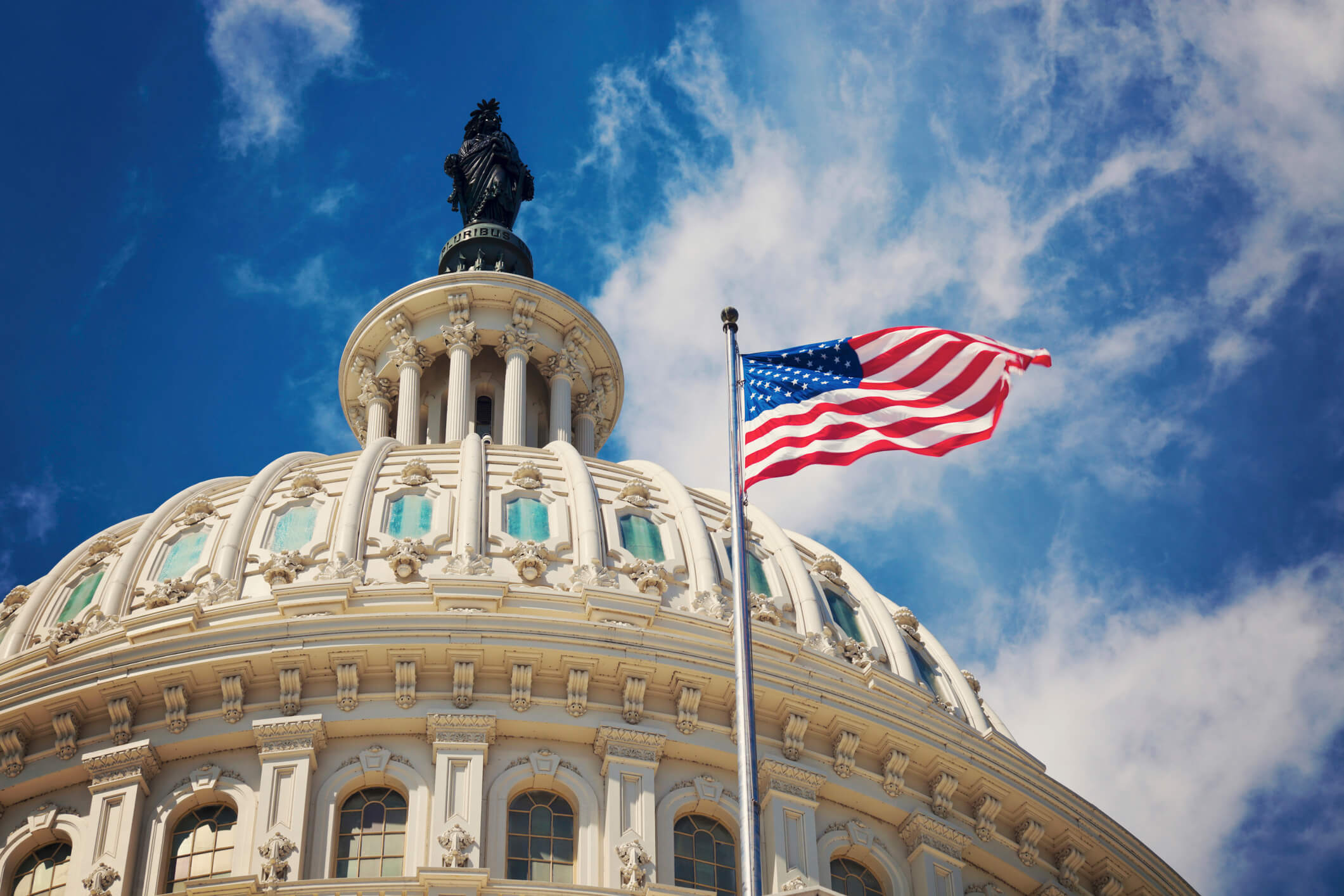
Congress Returns, ‘Lame Duck’ Session Begins. Before the 120th Congress gavels in on January 3, 2027, there are still approximately four weeks remaining of the 119th Congress (both the U.S. Senate and U.S. House of Representatives will not be in session during the week of Thanksgiving). During this “lame duck” session of the U.S. Congress, the Buzz will be especially interested in the following:
- Nominations. With Democrats wielding “advise and consent” confirmation authority in the next Congress, these next few weeks perhaps present the last opportunity for the Trump administration to confirm nominees to the executive and judicial branches. Any pending nominees who are not acted on before the current Congress adjourns sine die must be renominated in the next Congress (where they will have a very tough time getting confirmed). Current labor and employment-related nominees include:
- Douglas Ralph and Loren Sweatt, nominated to serve as members of the National Mediation Board, are awaiting Senate floor votes.
- Catherine Eschbach, general counsel, U.S. Equal Employment Opportunity Commission (EEOC), had her confirmation hearing before the U.S. Senate Committee on Health, Education, Labor, and Pensions (HELP) on November 11, 2026. Her vote in the HELP Committee is scheduled for November 18, 2026. If advanced by the committee, Eschbach would then be teed up for a vote on the Senate floor.
- Michael Doyle, nominated to be a member of the Occupational Safety and Health Review Commission (OSHRC) will also be voted on in the HELP Committee on November 18, 2026.
- This week, President Donald Trump nominated Matt Zandi to fill the remaining Republican seat on the EEOC. Zandi is currently chief of staff at the U.S. Department of Justice’s Civil Rights Division. Zandi will likely have to have a confirmation hearing, followed by a vote in the HELP Committee, before receiving a full vote by the Senate. This would be a lot to do in a short period of time.
- Douglas Ralph and Loren Sweatt, nominated to serve as members of the National Mediation Board, are awaiting Senate floor votes.
- Government funding. Current funding for the federal government runs through December 11, 2026. Currently, there isn’t much discussion about a potential federal government shutdown, though a deadline approximately one month away barely lands on the radar for federal lawmakers, who often don’t act until the last minute. The Buzz will be monitoring funding developments in the weeks ahead.
- Faster Labor Contracts Act (FLCA). The FLCA would impose an unrealistic, one-size-fits-all bargaining framework and let government officials dictate the terms of a first collective bargaining agreement. The House passed the bill in June 2026, with twenty Republicans voting in favor. Now the bill’s proponents are pushing for a vote in the Senate, where it is supported by Republican Senators Josh Hawley (MO), Bernie Moreno (OH), and Roger Marshall (KS). Further, Teamsters President Sean O’Brien recently posted on social media that he voted for Florida Republican Senator Ashley Moody and looks forward “to working with Sen. Moody in her role on the Senate HELP Committee to pass the Faster Labor Contracts Act.” Just as pending nominations expire when Congress adjourns sine die, so do active bills. As discussed in detail below, the FLCA likely has greater odds of passing Congress in 2027 with Democrats controlling the majority of both chambers.
Looking Ahead: The 120th Congress. As of this writing, beginning on January 3, 2027, when the 120th Congress begins, Democrats will enjoy a 55–44 majority in the Senate (Alaska results are still pending) and a 256–169 majority in the House. Despite the significant majorities, the Senate’s legislative filibuster and President Trump’s veto authority will both work to stymie much of the Democrats’ legislative plans. Still, there is much the Democrats can accomplish with control of Congress:
- Legislation. There will be no shortage of labor and employment bills introduced in the 120th Congress. At most, Democrats will only need to convince five Republican senators to vote with them (possibly as few as four, if Mary Peltola prevails in her race against Alaska Senator Dan S. Sullivan (R)) to send a bill to the White House. Additionally, President Trump’s populist leanings make the business community nervous that he might not necessarily veto every labor/employment bill the Democrats might send him. Finally, Democrats could use the next two years as a proving ground for messaging and legislation that they will push in the future. Here are some bills that the Buzz will be monitoring in 2027:
- Faster Labor Contracts Act. As mentioned above, the legislative prospects for the FLCA look even greater in 2027. Democrats in the House will pass the bill easily. In the Senate, Democrats will have fifty-five or fifty-six votes, plus the affirmative votes of Senators Hawley (R-MO) and Moreno (R-OH), who are original cosponsors of the bill. This would give the FLCA fifty-eight votes in the Senate—just two short of the sixty affirmative votes needed to overcome a filibuster. Will Democrats be able to convince two more Republicans to vote in favor of the bill?
- Protecting the Right to Organize (PRO) Act. The PRO Act has been big labor’s north star for many years now, as it would allow for card check organizing, ban right-to-work laws, restrict employer speech, allow for secondary boycotts, institute monetary penalties, and provide tests for joint employer and independent contractor status that employers may find ambiguous, among other provisions. In a social media post made this week by the House Labor Caucus—with more than 120 members—outlining their “Pro-Worker Path Forward,” the PRO Act was the only specific piece of legislation named. Over recent decades, both political parties have eschewed incremental legislative gains in favor of larger, more comprehensive bills. Could Democrats view the FLCA as “too small” and refocus their energies on passing the PRO Act? It is certainly possible. Moving both bills simultaneously is also a possibility.
- Warehouse Worker Protection Act. This bipartisan bill would create a new unfair labor practice for certain productivity quotas and resuscitate the Occupational Safety and Health Administration’s (OSHA) ergonomic standard, which was previously rejected by Congress, among other provisions.
- Wages. Democrats will likely introduce legislation to increase the minimum wage under the Fair Labor Standards Act (FLSA). Additionally, we could see an effort to increase the federal overtime period as called for in the Double the Wage for Overtime Act.
- Noncompete Agreements. Democrats may attempt to restrict or prohibit the use of noncompete agreements. The Workforce Mobility Act has enjoyed bipartisan support in recent Congresses.
- Arbitration. Multiple bills have been introduced in recent Congresses that would limit or restrict the use of workplace arbitration agreements, such as the “Restoring Justice for Workers Act,” the “Ending Forced Arbitration of Race Discrimination Act” (prohibiting predispute arbitration of race discrimination claims), and the Forced Arbitration Injustice Repeal (FAIR) Act (prohibiting predispute arbitration agreements in employment, consumer, antitrust, and civil rights disputes). The FAIR Act passed the House in 2022.
- Paid Sick Leave and Paid Family Leave. These issues are likely to be key components of Democrats’ legislative strategy as they will fit nicely into their broader “affordability” agenda. In the past, Democrats have championed the Family and Medical Insurance Leave (FAMILY) Act, which would provide employees with twelve weeks of paid leave for Family and Medical Leave Act (FMLA) purposes.
- Faster Labor Contracts Act. As mentioned above, the legislative prospects for the FLCA look even greater in 2027. Democrats in the House will pass the bill easily. In the Senate, Democrats will have fifty-five or fifty-six votes, plus the affirmative votes of Senators Hawley (R-MO) and Moreno (R-OH), who are original cosponsors of the bill. This would give the FLCA fifty-eight votes in the Senate—just two short of the sixty affirmative votes needed to overcome a filibuster. Will Democrats be able to convince two more Republicans to vote in favor of the bill?
- Oversight. As chairs of the various congressional committees, Democrats will set the agenda for the 120th Congress. With legislation likely off the table, their top priority will undoubtedly be to conduct robust oversight of both the administration and the private sector. Foreign policy, immigration enforcement, artificial intelligence, President Trump’s impoundment of appropriated funds, and investigations into agency officials all promise to be prime targets for oversight.
In the labor and employment space, the likely incoming chair of the House Education and Labor Committee, Bobby Scott, has already sent letters to EEOC Chair Andrea Lucas, Secretary of Labor Keith Sonderling, and National Labor Relations Board (NLRB) Chair James Murphy instructing them to preserve records under the Federal Records Act of 1950 to ensure “that Congress can fulfill its essential oversight responsibilities.” The EEOC, which has perhaps taken the most dramatic turn in how it now views itself as an executive branch agency, and in its enforcement priorities, will draw significant scrutiny. Through information requests, subpoenas, and hearings, Democratic lawmakers will demand information about the EEOC’s deemphasis of the disparate impact theory of discrimination, the rescission of its harassment guidance, and the elimination of the EEO-1 form, among other topics. Similarly, Democratic lawmakers will investigate employment-based immigration activities within the U.S. Department of Homeland Security, the U.S. Department of Labor (DOL), and the U.S. Department of State.
Additional activity at the DOL and NLRB, both of which have stayed in their traditionally partisan lanes, will also be examined, but may be further down the list of Democratic priorities. - Appropriations. Democrats may also seek to use the annual appropriations process to impact labor, employment, and immigration policies. Using the “power of the purse,” Democrats could include riders in annual spending bills that prohibit the finalization, implementation, and enforcement of particular regulations. Republicans would likely push back on such a strategy by leaning into the Senate’s legislative filibuster and President Trump’s veto.
A Salute to Veterans. Veterans Day, observed this week, can be traced to the interment of an unidentified American service member who died in World War I and to the dedication of the Tomb of the Unknown Soldier at Arlington National Cemetery on November 11, 1921. Soon after, annual memorial ceremonies honoring American veterans would occur throughout the United States. The date, November 11, was chosen to commemorate the Armistice of November 11, 1918, which ended World War I. (The Armistice took effect at the eleventh hour of the eleventh day of the eleventh month of the year.) Through a resolution issued in 1926, Congress officially recognized the day as “Armistice Day.” Following World War II, some veterans began to refer to Armistice Day as “Veterans Day” in order to honor all veterans, not just those who served in World War I. Recognizing this, Congressman Edward Rees of Kansas introduced a bill to officially designate November 11 as “Veterans Day.” President Dwight D. Eisenhower signed the bill into law in 1954. The Uniform Monday Holiday Act of 1968 temporarily moved the observance of Veterans Day to the fourth Monday in October, but in 1978 the holiday’s date was changed back to November 11 to reemphasize the date’s historic significance.