

 United States
  Canada (EN)
  México
  France
  Deutschland
  United Kingdom
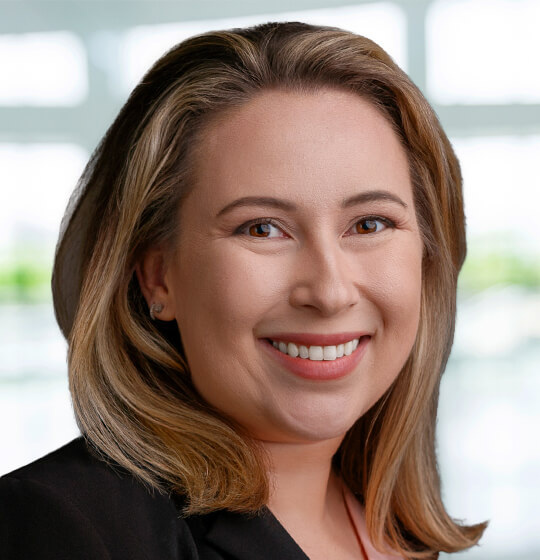
In this episode of our Cross-Border Catch-Up podcast series, Patty Shapiro (shareholder, San Diego) and Shirin Aboujawde (of counsel, New York) discuss the complexities of conducting background checks from an international employment law perspective. The speakers review the varying regulations and practices across different jurisdictions, including limitations on criminal background checks, the nuances of employment references, and the permissibility of drug testing and medical exams.
Home > Insights & Resources > Podcasts > Cross-Border Catch-Up: Global Background Checks—Overcoming Legal Hurdles
Cross-Border Catch-Up: Global Background Checks—Overcoming Legal Hurdles
By Patty Shapiro and Shirin Aboujawde
0:00:00
0:00:00


Transcript
Announcer: Welcome to the Ogletree Deakins podcast, where we provide listeners with brief discussions about important workplace legal issues. Our podcasts are for informational purposes only and should not be construed as legal advice. You can subscribe through your favorite podcast service. Please consider rating this podcast so we can get your feedback and improve our programs. Please enjoy the podcast.
Patty Shapiro: Welcome to the Cross-Border Catch-Up, the podcast for global employers who want to stay in the know about cutting-edge employment issues worldwide. I’m Patty Shapiro, and I’m here today with my colleague Shirin Aboujawde. We’re cross-border attorneys here at Ogletree, and today we’re going to talk about conducting background checks from an international employment law perspective. Thanks for joining us today, Shirin.
Shirin Aboujawde: Thanks for having me.
Patty Shapiro: Let’s dive right in. Background checks can be really robust in the U.S., as you know, and many employers want to have a consistent background check process globally. But outside of the U.S., it’s not as simple as that, is it?
Shirin Aboujawde: No, it’s not, Patty. You’re absolutely right. Outside of the U.S, there are a ton of restrictions on what can and cannot be included in a background check. There’s sometimes a misconception that you can’t do them at all outside of the U.S., and that’s not true either. But you do need to be careful to follow country-specific guidelines on what you can and cannot include.
Patty Shapiro: I think the big one that everyone is always curious about is criminal background checks. Can you do those globally?
Shirin Aboujawde: It’s very difficult. So outside of the U.S., almost no other jurisdiction allows you to carry out criminal checks in the same way as you would do in the U.S. The U.K. and Australia have comparable systems, but how and when you get to use those is far more limited. And for the other European and jurisdictions and for some other countries as well, you can request that the employee provide a certificate of good standing or clearance from their local police precinct. This is a certificate from the police precinct that basically says you have no criminal record with them.
Patty Shapiro: What if you’ve only moved to your local precinct recently? Can you request the employee get certificates from other precincts?
Shirin Aboujawde: Most of the time, no. So, as you can imagine, requesting these is often not worth the hassle because they’re so limited in scope that they’re not really worthwhile. And even if you have a candidate who’s been living in the same location their entire life, you still won’t see all of their criminal convictions. Some convictions will have become spent over time, and those wouldn’t be included.
Patty Shapiro: And what is a spent conviction in this context?
Shirin Aboujawde: It’s a conviction that’s so old, so usually more than five or in some cases 10 years old, that it essentially falls off an individual’s record, and employers can’t ask or know about it.
Patty Shapiro: Got it. So, let’s turn to some other types of screening. What about checking previous employment and asking for references? Can you do that globally?
Shirin Aboujawde: Yeah. So, this is one area where most countries say that you can either ask for a reference or a certificate of employment, but you have to be careful to know about the customs and practices of each local market so that you can properly interpret what you’re getting.
Patty Shapiro: What do you mean?
Shirin Aboujawde: Well, it depends on the country, but in countries like Germany or Switzerland, for example, references are phrased in almost a coded language. So, saying a previous employee was incredible, obviously still means that they’re incredible. But using more basic words like satisfactory or good can sometimes be an indication that they were actually a terrible employee.
Patty Shapiro: So, why would employers even provide that kind of a reference in that case?
Shirin Aboujawde: Great question. Simple answer is because they have to. In a number of jurisdictions, employers aren’t simply allowed to give a statement of employment which gives dates of employment and last position held. Instead, they have to give a full reference with details about an employee’s performance.
Patty Shapiro: Okay. I can see now why employers who are forced to write a reference would use words like good or satisfactory in situations where the employee was not great. That makes sense. What about drug testing? Would that be permissible outside of the U.S.?
Shirin Aboujawde: Again, it depends on the jurisdiction. So, drug testing wouldn’t generally be permissible in Europe, but some countries in the Middle East and Asia do permit it as long as you have consent. The only problem that usually arises in those countries is that in some cases, if you have an employee who actually tests positive for drug use, you have to report it to the local authorities because it’s a criminal offense. And a lot of employers don’t want to do this or get involved with the local authorities, so they avoid drug testing altogether even though it’s permissible.
Patty Shapiro: Sure, that makes sense. Is there anything else employers can include when conducting a background check?
Shirin Aboujawde: Yeah. So, employers can always verify education. That’s the one caveat that seems to apply to all of the jurisdictions, and this can be done simply and easily by asking for an education certificate or a license. It’s one of the few aspects of a background check that is generally permissible in all jurisdictions.
Patty Shapiro: Well, at least there’s that. Is there anything else that is unique to background checks outside of the U.S.?
Shirin Aboujawde: The only other unique aspect of background checks that you see outside of the U.S. are sometimes that they’ll have required medical checks, and you see that quite commonly in jurisdictions like the UAE, India, and Japan, for example.
Patty Shapiro: Wow. So, you can’t do criminal checks, but you can ask for a medical exam.
Shirin Aboujawde: Yeah, I know it sounds so counterintuitive, but in some jurisdictions that’s the common practice. You wouldn’t obviously know as an employer about the medical details of a candidate, only that they were medically fit for work.
Patty Shapiro: Got it. So, a lot to think about before employers try to implement a global background check policy.
Shirin Aboujawde: Absolutely.
Patty Shapiro: Well, you’ve definitely left our listeners who are considering implementing global background checks with a lot to think about. Thank you all for joining us for today’s Cross-Border Catch-Up. Follow us to stay in the know about cutting-edge employment issues worldwide.
Announcer: Thank you for joining us on the Ogletree Deakins podcast. You can subscribe to our podcast on Apple Podcasts or through your favorite podcast service. Please consider rating and reviewing so that we may continue to provide the content that covers your needs. And remember, the information in this podcast is for informational purposes only and is not to be construed as legal advice.
Speakers

Topics
Share Podcast


Practice Group
Cross-Border
Often, a company’s employment issues are not isolated to one state, country, or region of the world. Our Cross-Border Practice Group helps clients with matters worldwide—whether involving a single non-U.S. jurisdiction or dozens.