


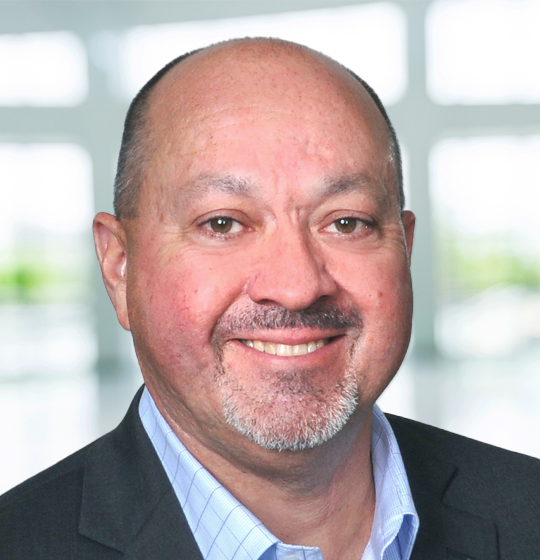
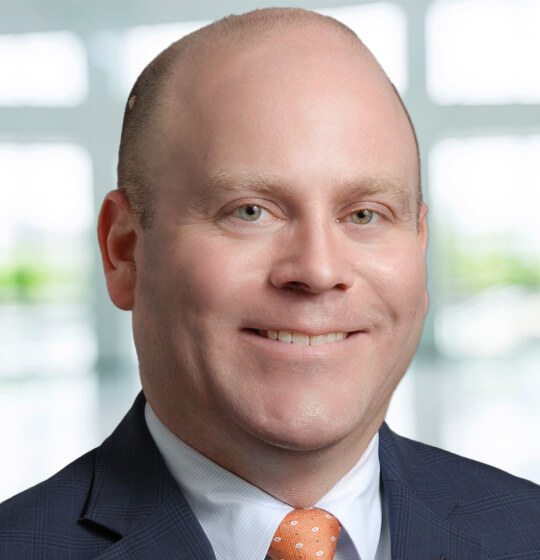
In Washington, D.C., there is a saying: “personnel is policy.” In this episode of our Dirty Steel-Toe Boots podcast series, shareholders Phillip Russell (Tampa) and Jim Plunkett (Washington) break down the significance of Labor Secretary Lori Chavez-DeRemer’s departure and the rise of Acting Secretary Keith Sonderling for employers. They examine how Sonderling’s background and his time as deputy secretary have already shaped the DOL’s enforcement and policy direction. The speakers also take a closer look at OSHA head David Keeling and what to expect regarding issues like the heat illness standard.
Home > Insights & Resources > Podcasts > Dirty Steel-Toe Boots: Inside the Beltway—Unpacking the DOL’s Shifting Leadership
Dirty Steel-Toe Boots: Inside the Beltway—Unpacking the DOL’s Shifting Leadership
0:00:00
0:00:00



Transcript
Announcer: Welcome to the Ogletree Deakins podcast, where we provide listeners with brief discussions about important workplace legal issues. Our podcasts are for informational purposes only and should not be construed as legal advice. You can subscribe through your favorite podcast service. Please consider rating this podcast so we can get your feedback and improve our programs. Please enjoy the podcast.
Phillip Russell: Welcome back everybody to another episode of Dirty Steel-Toe Boots. It’s a podcast by the law firm of Ogletree Deakins for employers and those in their legal safety and HR departments who might need to better understand OSHA as an agency, and of course the state plans too, and the law that governs them.
I’m your host, Phillip Russell. I’m a shareholder in the Tampa office of the firm. I have a national practice in which I’ve handled over 250 fatality cases and hundreds of other kinds. We’ve one of the largest workplace safety and health practice groups in the country. We cover all 50 states with extensive experience with Fed OSHA and all the state plans. Our approach is simple, but maybe not easy. We help clients try to avoid or minimize OSHA citations and improve safety.
Keep in mind, this podcast is about education, not about legal advice for specific circumstances as an employer. It is important for you to know what you can and can’t do but also know what OSHA can and can’t do. You can’t hope to hold the agency accountable to the law if you don’t know something about the law.
Today I’ve got my good friend Jim Plunkett. Jim is from our D.C. office, and I like to refer to him as our man in DC. He always seems to have his pulse on what goes on inside the beltway.
So Jim, welcome back.
Jim Plunkett: Hey, Phil, thanks for having me. Always great to be back on the podcast.
Phillip Russell: Thanks, man. Today we’re going to talk about, and you’ve said this before, you make sure I get this right, is it personnel is policy? Is that the D.C. phrase?
Jim Plunkett: Yeah. I mean, that’s a D.C. phrase, but really applies to all aspects of life or lots of other professions if you really think about it. All it really means is whoever’s in charge gets to implement their prerogatives, their particular agenda. So, whoever’s running the head of the agencies or some of these sub-agencies, their background, their experience, their personal agenda matters, and that’s going to be reflected in the overall agenda that that agency or sub-agency is going to pursue.
Phillip Russell: Yeah. I think that’s perhaps why we see our friends in the media when they write articles or do news broadcasts, or I guess these days, other podcasts, there’s always this seems to be an identification of what party they’re from. I guess that’s always been the case with policymakers, but I’ve seen it a lot more with judges over the last decade or so. But yeah, I mean, who are in these regulatory roles, which is what we’ll talk about today? Who is there matters? Because they do have a history. They do have a background. What their education is, what their career was before the government role? All those things come into play. And our audience, our employer audience, it would be helpful for them to understand a little bit about who these folks are.
So, with that, let’s turn our attention to the United States Department of Labor. Big changes there over the last few months. Of course, the big one this week with the announcement that Secretary Lori Chavez-DeRemer has stepped aside and resigned to be replaced, at least in the interim, by Keith Sonderling, from Florida, by the way. So, we’ll talk about that. But what do you make of this…I guess first of all, isolated to Secretary Chavez-DeRemer stepping down. What can you share with us about that?
Jim Plunkett: Sure. Yeah. Chavez-DeRemer, I think was a surprise pick to rewind things a little bit. She was a little bit of a surprise appointee by President Trump to run the Department of Labor, primarily because she was a one term member of Congress. She’s a Republican. She supported the Protecting the Right to Organize Act, which is big labors, holy grail of labor law reform that would really upend the current legal framework regarding labor unions in the workplace and is written by the labor unions and very much supported by the Democrats and opposed by the Republicans. So, it was very odd and a little out of the ordinary to have a Republican in the House supporting the Protecting the Right to Organize Act. But she was chosen as a Secretary of Labor, and as I said, it was a surprise, but in a way it also fit within this new populist streak that we see in the White House.
If you recall, the Teamsters President Sean O’Brien spoke at the Republican National Convention a couple of summers ago and things like President Biden’s executive order on project labor agreements. The administration’s doubled down on that. Lots of rank-and-file union members did vote for President Trump. So, while a surprise, Chavez-DeRemer fits within that strain of thinking that’s coming out of the White House, which has trickled down to some members of Congress that we can maybe talk about on another episode, Phil.
Chavez-DeRemer was a little bit of a sleeper pick, right? There was some thought within the business community at that time that she might be more of a figurehead type of secretary, the secretary that went to the factory openings and stuck the golden shovel in the ground or cut the ribbon and took the photo opportunities and that sort of thing. And that’s really what she did. She patted herself on the back for a listening tour that she spent the last 18 months or so taking around the country and she was going to get to all 50 states. I don’t know if she managed to get there. I think she came pretty darn close. She would be the face of the Department of Labor, but not necessarily holding the pen in terms of driving the policy agenda or the enforcement agenda.
And just within the last couple of months or so, some stories broke about some of those travel habits and that they maybe weren’t the best use of taxpayer dollars. And so, she just couldn’t outrun those stories. A couple of members of her staff had to resign, and then it finally got to her this week, and she stepped aside pretty quietly earlier this week.
Phillip Russell: Yeah. Let’s talk about a couple things there. First of all, on the policy, you’re right and maybe being a sleeper pick. I remember, I believe it was November or December of 2024 when we heard that she was going to be nominated. And I remember hearing it, I believe it was on a Friday, and my phone immediately lit up with, who? Was the most common question because it wasn’t someone that we in the labor and employment world, we weren’t very familiar with her.
I guess the next thing that I guess I got a bit of a laugh out of was some of the political references to her being a bit of a unicorn because she was a Republican from Oregon, which apparently is rare as a unicorn. To be fair here, I guess the Trump administration, as you explained, had the relationship with the Teamsters and this was supposed to be at least perhaps an indication there. And so, as I’ve said in other platforms is, this is Trump administration, not surprisingly is not a traditional Republican administration. No surprise there from what we’ve seen. And so, the pick was, although a surprise, maybe not much of a shocker.
But what did surprise me, I think in the ensuing months and years is, not years but months, is that the secretary was doing the tour, but really, it didn’t seem to be having our hand too much in policy. Am I right about that?
Jim Plunkett: Yeah. I think a lot of the little bit of the policies changes that we’ve seen come out of the administration, I think first of all, our efforts to resuscitate or go back to policy initiatives that we saw in the first Trump administration…We can talk a little bit about those in more detail if you want in a few minutes and they’ve all been policy initiatives that have been on the wishlist of the business community. So, in other words, I don’t think anything that we’ve really seen from the Department of Labor over the last several months has this Chavez-DeRemer stamp on it so to speak. It doesn’t really seem like she’s had much influence in what has been going on there, from a policy perspective anyway.
Phillip Russell: Yeah. And I think what was interesting to me when trying to follow about what was going on is that the policy announcements that were made, and now I’ll be specific to even the world of workplace safety and OSHA, the policy announcements and changes were being made not so much through the Secretary of Labor, but through the Deputy Secretary of Labor, who happens to be Keith Sonderling. And if you followed his linked impost as I do, you would see that he was the one making policy announcements, not her. That struck me as interesting as we were going through that and we, and our clients were trying to follow what to expect. Well, that’s who we were hearing from, not so much Chavez-DeRemer.
Jim Plunkett: Yeah. And not to jump the gun, but he’s now serving as the acting secretary of labor. And as the number two person, I think when Chavez-DeRemer was named as the appointee and Sonderling was named as the number two, I think the business community understood what the two roles or how the two roles were going to play out that Chavez-DeRemer would be that face of the Department of Labor, whereas then Sonderling would be the one that was implementing the policy agenda and that’s really what’s happened. And Sonderling has this experience. He did serve in the Department of Labor in the first Trump administration. He then went to serve as a commissioner on the EEOC. So, he is a real veteran in terms of understanding the policy debates that percolate in Washington, D.C. in terms of understanding the important labor and employment issues that face employers and employees. He also knows how Washington, D.C. and these agencies work, right?
I think there is some comfort within the business community that Keith was the number two to begin with. And then I think that comfort’s going to continue knowing that he’s now serving as the acting secretary. I don’t think that acting secretary Sonderling is really going to miss a beat and I think he is going to continue the policy and enforcement agenda at the Department of Labor pace.
Phillip Russell: Well, I know him as Keith because I knew him when he was in private practice back here in Florida. He and I would cross paths from time to time and are both members. I’m a current member. He’s a former member of what’s called the Academy of Florida Management Attorneys and a group of veteran lawyers that represent employers. And so, I just know him as Keith, but Secretary Sonderling, we should say Acting Secretary Sonderling, one of the things I noticed…And just again, looking at his LinkedIn post four months ago, we had an announcement from OSHA about some letters of interpretation and the announcement came from him, which I thought was very telling. But it also seems to be consistent with what I know of him, which is I think he understands the regulatory process, he understands the employer perspective, but I also think he understands balance. And that’s what I’m looking for I think out of an Acting Secretary Sonderling and who knows, maybe he goes to the Senate.
I guess we can talk about that in a minute, but it doesn’t have to with the interim label. He can certainly serve in that role, and I think that’s what you’re going to see. I think you’ll see an employer perspective. It gets fair treatment, not just shunned or disregarded, but I don’t think that it would be a balance. I don’t think that it would be a perspective that’s out of balance. Does that make sense? Is that consistent?
Jim Plunkett: Yeah, I agree, Phil. I’ve met acting Secretary Sonderling on multiple occasions and spoken with him several times, and he doesn’t strike me as an ideologue, and he does have that practical real-world experience where you are dealing with employers and employees, and hey, we got to make this situation work, right? If we want to get the widgets out and we’re getting folks paid, he understands that there’s that real world dynamic out there. So, I think he views some of the policy decisions that come before him with that real world perspective, how is this going to impact both employers and employees? And because of that, I think that he’s going to be quite effective in his current role.
Phillip Russell: Yeah. I guess what I’m hearing you say is you don’t expect anything different than what we’ve already been seeing because we essentially have been seeing his work product process.
Jim Plunkett: Yes. Yes. As the number two, he’s been driving the policy agenda at the Department of Labor since he was part of the transition team, right? So, he’s been there literally since day one, and so everything that we’ve seen has probably passed through his desk in some form or fashion and he’s going to continue to do that.
Phillip Russell: Okay. Let’s talk just about OSHA for a minute.
Jim Plunkett: Sure.
Phillip Russell: The Assistant Secretary of Labor for Occupational Safety and Health, it’s a mouthful, the head of OSHA is David Keeling, but he had a similar history with the…I guess I’m not sure it was similar, but he has a history with the Teamsters as well. When he was at UPS, he developed a close relationship there. And I think it’s widely understood that he may have been a similar pick with Chavez-DeRemer in terms of the relationship with labor. Is that what you understand too?
Jim Plunkett: Yes, that he has a good relationship with labor, but he’s equally respected by the business community. I think he’s one of these rare nominees that really got support from both the labor unions and the business community. I think that’ll help him as he moves forward as the head of OSHA.
Phillip Russell: Understood. Okay, gotcha. So, do you see any change in workplace safety and health with Keith Sonderling taking the interim role for now? Are you expecting us to see any changes either in personnel or enforcement priorities or strategies?
Jim Plunkett: Yeah. With your practice, Phil, you see more of the day-to-day impact of OSHA on the workplace. From where I am, I haven’t really seen a ton of activity from OSHA over the last 18 months. Now, Keeling, he didn’t get confirmed until October of 2025. It was right in the middle of that 43-day shutdown. So, he hasn’t really had an opportunity to be on the job for terribly long. So, in some ways, I think he’s really getting his feet underneath him. I do think that Acting Secretary Sonderling, perhaps unlike he might do with wage and hour division, because that’s where he’s previously served, I think Sonderling is probably going to let Assistant Secretary Keeling do his own thing and pursue his own agenda to a certain extent at OSHA just because Acting Secretary Sonderling doesn’t have that inherent OSHA workplace safety expertise. You contrast that with his wage and hour expertise. So, I think he’s going to give Keeling an opportunity to drive his own agenda so to speak.
Phillip Russell: Yeah, that’s fair. I mean, I think maybe to answer what your comment back to me about what I see, and this is probably a deeper dive for another podcast, but what we’re seeing and by way of field activity certainly does not match what I would consider to have been some of the, I guess rhetoric is the right word, for the last six months, because I’ve seen some of David Keeling’s interviews and he talks about being more cooperative and more engaged with the business community, yet we’ll have in the field very, very aggressive behavior by some compliance officers that might not fit that policy direction, but that’s not uncommon looks. I mean, sometimes, I know you’ve seen this before where the policy statements out of Washington don’t quite match exactly what’s going on in the field. I don’t think that’s too terribly surprising.
Jim Plunkett: Sure.
Phillip Russell: We’ll see if time that changes, of course, and we’ll see, but right, now we’re still seeing…Again, the agency is down in terms of total headcount. I know David Keeling has said that he wants to try and get that back up. I’m not quite sure how that works on the dynamics on the budgeting process, but with the agency down, I’ve heard as much as 20% of their headcount down. If that’s true…At least I’ll tell you from the Ogletree perspective from our team, we haven’t seen a decline in the work, and maybe that’s just market share, Jim. I don’t know, but we have not slowed down in our practice group. We’re incredibly busy and we still see a lot of aggressiveness in the field from OSHA. But okay, well, good points on those.
Let’s turn our attention then back over…And actually, I guess I should say this. I want to highlight what’s coming next. The action we have seen out of OSHA is this heat illness or the heat standard, which certainly has not officially been scrapped, the one that was proposed by the Biden administration, but it seems to have been shelved or maybe ignored in favor of OSHA issuing or reissuing the National Emphasis Program on heat that it first issued in April of 2022. It’s now reissued in April of 2026 with a fear term. I don’t want to steal thunder from Deanna Hayes and others who are doing some blogs and webinars on that. I think she may be on the podcast coming up soon. So, we’ll do it deeper dive there, but that’s been one major policy change we’ve seen is that it looks like OSHA’s going back to an enforcement scheme and strategy that involves the general duty clause as opposed to having a specific standard.
Now, of course, cue the states here, and this is, again, probably for another podcast, but cue the states because now at least Virginia and maybe others are saying, “Well, we don’t want to wait on the federal government to have a standard. We’re going to get our own.” So, we’ll see what happens there.
Jim Plunkett: Yeah. And the employer community is a little bit in the dark on what’s going to happen with that heat standard. There’s some hope that or some though that OSHA in not killing the proposal entirely was going to move and transform it into a performance-based standard. And I think we still might see that. I don’t think we’ll see it by this summer, but as I said, the employer community’s in the dark because the regulatory agenda that the federal government has released hasn’t been updated since September of 2025. And when they issued that, OSHA basically said TBD on the heat standard. So, I think the business community and other stakeholders are really anxious to see another regulatory agenda to see what OSHA might be doing with this heat standard, performance-based approach depending…Of course, the devil’s always in the details, but that could win the support of the business community and hopes of blunting a future democratic effort of resuscitating that Biden standard. So, we’ll see how this plays out, but right now, as I said, we don’t really know and we won’t know until we see a new regulatory agenda.
Phillip Russell: Well, good point. Let’s keep an eye on that. I know you’ll be watching that regulatory agenda for our clients and keep them updated. Last question is, will Keith Sonderling lose the interim label and go before the Senate for confirmation? What do you think?
Jim Plunkett: That’s a good question. I know, in the past, President Trump has, I don’t think specifically in reference to the Secretary of Labor, but has said that for other agencies officials, that he likes the acting designation. There are some restrictions on how long somebody can serve in the acting designation role, but the Department of Labor can be a little bit different. We saw this in the Biden administration with Julie Sue. She served for quite a long time. They found a different legal argument that won some support on why they can keep the person in that acting secretary of role for a while.
As long as there’s not that legal pressure, I’m not sure that the administration is going to push for it. I’m not sure that the Senate’s going to want to take the time to do it. But if you talk to people who have been in any of these agencies, that Senate confirmation, that vote, that literal vote of approval does carry some weight and does give you a little bit of more of authority, not legal authority, but legal authority or authority within the building so to speak. So it could be that maybe Sonderling and maybe the administration want to do that eventually, but I think for the time being, I think he’ll retain that acting designation.
Phillip Russell: Okay. Well, I guess time will tell, but as we started off at the beginning, personnel is policy. So, there’s two…We spoke mostly today about acting Secretary of Labor Keith Sonderling, spoke a little bit about the Assistant Secretary of Labor for…See? It’s a mouthful even for me for Occupational Safety and Health David Keeling.
Well, thanks for coming back on the show, Jim. I always appreciate hearing your insights from Inside the Beltway and the Beltway Buzz every week, man. That is some good stuff. Thanks for sending that out to all of our clients. I really appreciate that.
Jim Plunkett: Well, thank you for that, Phil, and thanks for having me on. Always enjoy talking with you.
Phillip Russell: Folks, it’s always good to have Jim on. I know you appreciated his insights. I certainly do. He always is a special guest at our Workplace Safety Symposium. And this year in 2026, the OD Workplace Safety Symposium will be in Austin, Texas, deep in the heart of Texas. Bring your boots. The date is December 2nd, 3rd, and 4th, and it’ll be at the Austin Marriott downtown. We’ll be releasing the agenda for that in May, so keep an eye out for it.
Jim, thanks again. Take care, everybody.
Announcer: Thank you for joining us on the Ogletree Deakins podcast. You can subscribe to our podcast on Apple Podcasts or through your favorite podcast service. Please consider rating and reviewing so that we may continue to provide the content that covers your needs. And remember, the information in this podcast is for informational purposes only and is not to be construed as legal advice.
Speakers
Topics
Share Podcast


Practice Group
Workplace Safety and Health
The Occupational Safety and Health (OSH) practice of Ogletree Deakins is characterized by the knowledge and credibility of our attorneys, and the exceptional level of service that we provide to our clients.