United States
  Canada (EN)
  México
  France
  Deutschland
  United Kingdom


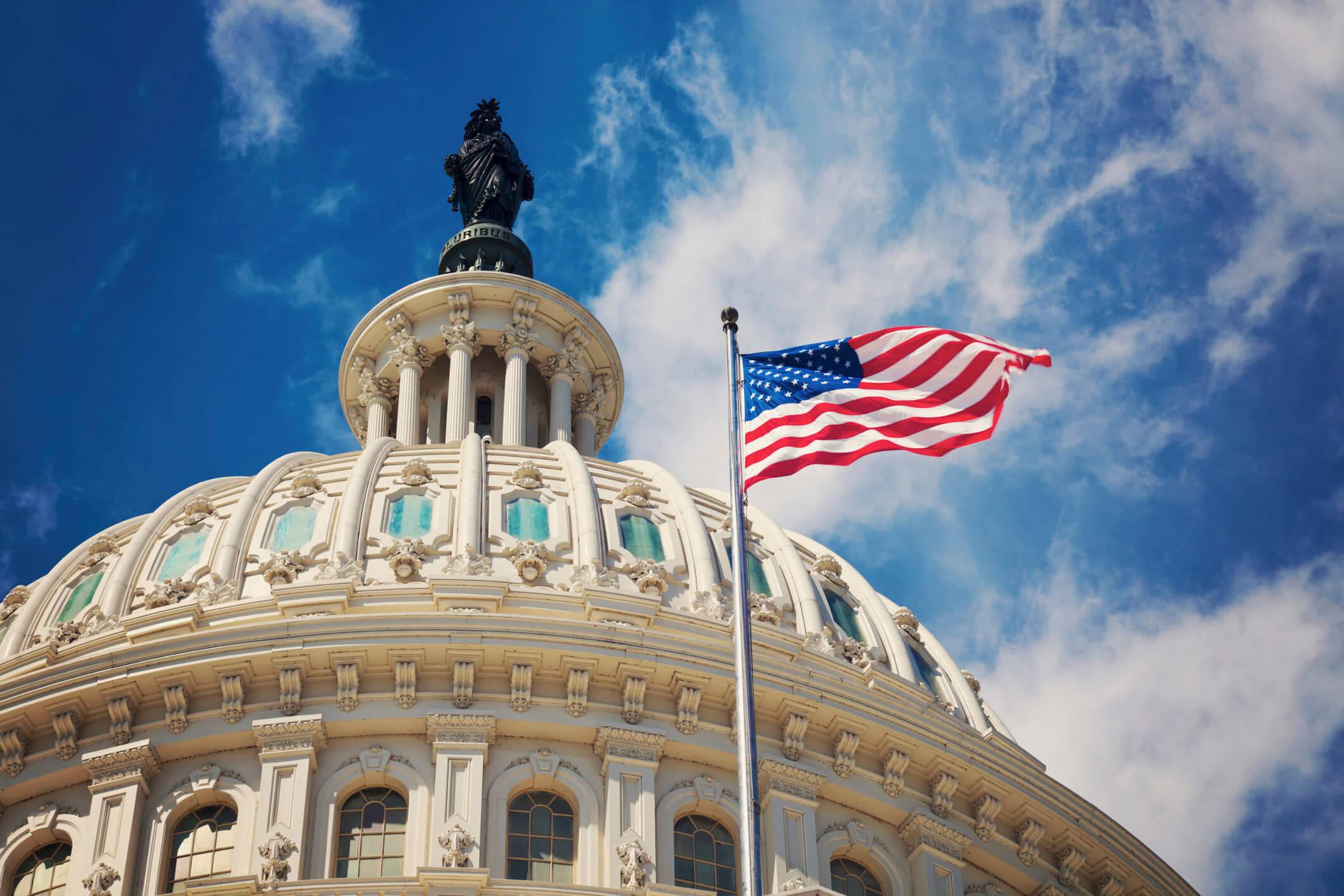
Federal Government Mostly Funded; DHS Remains. After a brief partial shutdown, the federal government reopened for business on February 3, 2026, following passage of legislation in the U.S. House of Representatives that President Trump signed into law later that day. The funding package includes five underlying spending bills, which, combined with other funding bills already enacted, will fund the vast majority of the federal government through September 30, 2026. This includes funding for agencies popular here at the Buzz, such as the U.S. Department of Labor (DOL), the National Labor Relations Board (NLRB), and the U.S. Equal Employment Opportunity Commission (EEOC). However, securing full fiscal-year funding for the U.S. Department of Homeland Security (DHS) remains a challenge, as Democratic lawmakers are pushing for changes surrounding Customs and Border Protection and Immigration and Customs Enforcement. As part of the legislation signed into law this week, DHS will continue receiving current funding only through February 13, 2026—which doesn’t give lawmakers a lot of time to work out a long-term deal. If there is not a deal by the deadline—either a full-year funding bill or a continuing resolution—DHS will shut down.
USCIS Announces Dates for Initial H-1B Cap Registration. The initial registration period for the fiscal year 2027 H-1B cap season will open at noon ET on March 4, 2026, and close at noon ET on March 19, 2026, according to a U.S. Citizenship and Immigration Services announcement. For this year’s cap season, two new policies will loom large over the process: the administration’s H-1B weighted selection rule and President Trump’s $100,000 H-1B proclamation. While no legal challenges to the weighted selection rule have been filed, three lawsuits have been filed challenging the proclamation. None of those lawsuits, however, is likely to be resolved before the initial registration period opens. Natalie L. McEwan has additional details.
DHS, DOL Provide Additional H-2B Visas. On February 3, 2026, DHS and DOL jointly issued a temporary final rule that provides 64,716 H-2B nonimmigrant visas for fiscal year 2026. The additional visas will be made available in three different allocations: first, for employment beginning on January 1, 2026, followed by employment start dates beginning April 1, 2026, and finally for employment start dates from May 1 through September 30, 2026. According to the rule, the visas “will be available only to those American businesses that are suffering or will suffer impending irreparable harm, i.e., those facing permanent and severe financial loss, as attested by the employer.”
Bipartisan House Group Endorses Franchise Joint Employer Bill. The Buzz recently discussed how Republican leaders had to cancel a scheduled floor vote on the Save Local Business Act, the long-standing bill that would provide employers with clarity regarding potential joint-employer liability. While that was a blow to the broader business community, a smaller segment of that community—franchisors and franchisees—received some good news this week on the legislative front. The Problem Solvers Caucus—a bipartisan group of more than forty House members “committed to advancing common-sense solutions to key issues facing our nation”—announced its endorsement of the American Franchise Act (H.R. 5267). The bill clarifies that a franchisor may only be a joint employer of employees of a franchisee when it “possesses and exercises substantial direct and immediate control over one or more essential terms and conditions of employment” of those employees. The bill further defines what it means to exercise “direct and immediate control” over wages, benefits, hours of work, hiring, discharge, discipline, supervision, and direction. Time will tell whether the Problem Solvers Caucus’s endorsement helps the American Franchise Act get additional legislative traction.
House Subcommittee Holds Second Hearing on Artificial Intelligence (AI). On February 3, 2026, the House Subcommittee on Health, Employment, Labor, and Pensions held its second hearing in a series of hearings on the impact of AI in the workplace. While the first hearing took a broad view of AI’s impact on education and jobs, this week’s hearing focused on whether current federal laws and regulations should adapt to developing technology. Republican members and their witnesses argued that even with the increasing advancement and deployment of AI in the workplace, actions resulting from its use already fall within the scope of federal laws like the Fair Labor Standards Act, the National Labor Relations Act, and Title VII of the Civil Rights Act of 1964. These same witnesses also warned about the pitfalls of rushing to regulate at the state and local levels and of the conflicts and confusion that may result from such a regulatory patchwork. On the other hand, the Democrats and their witness argued that AI could be used to discriminate against job applicants, unlawfully surveil workers, or establish unsafe productivity standards.
Super Bowl Sunday in the Senate. Even with funding for DHS set to expire on February 14, 2026, Congress has no plans to stay in Washington, D.C., this weekend to negotiate. The situation was decidedly different approximately two years ago, when the U.S. Senate met on Super Bowl Sunday, February 11, 2024, to debate a $95 billion foreign aid and national security supplement to provide funding to Ukraine, Israel, and Taiwan, among other provisions. To our knowledge, this was the first and only time the Senate has met on Super Bowl Sunday. As for the game, the Kansas City Chiefs defeated the San Francisco 49ers, 25–22 in overtime. And, like the game, debate in the Senate went into overtime as well, extending into the following day and night, culminating in a vote at 5:14 a.m. on the morning of February 13, 2024. Passed by a vote of 70–29 in the Senate, the bill was eventually passed by the House and ultimately signed into law by President Joe Biden on April 24, 2024.