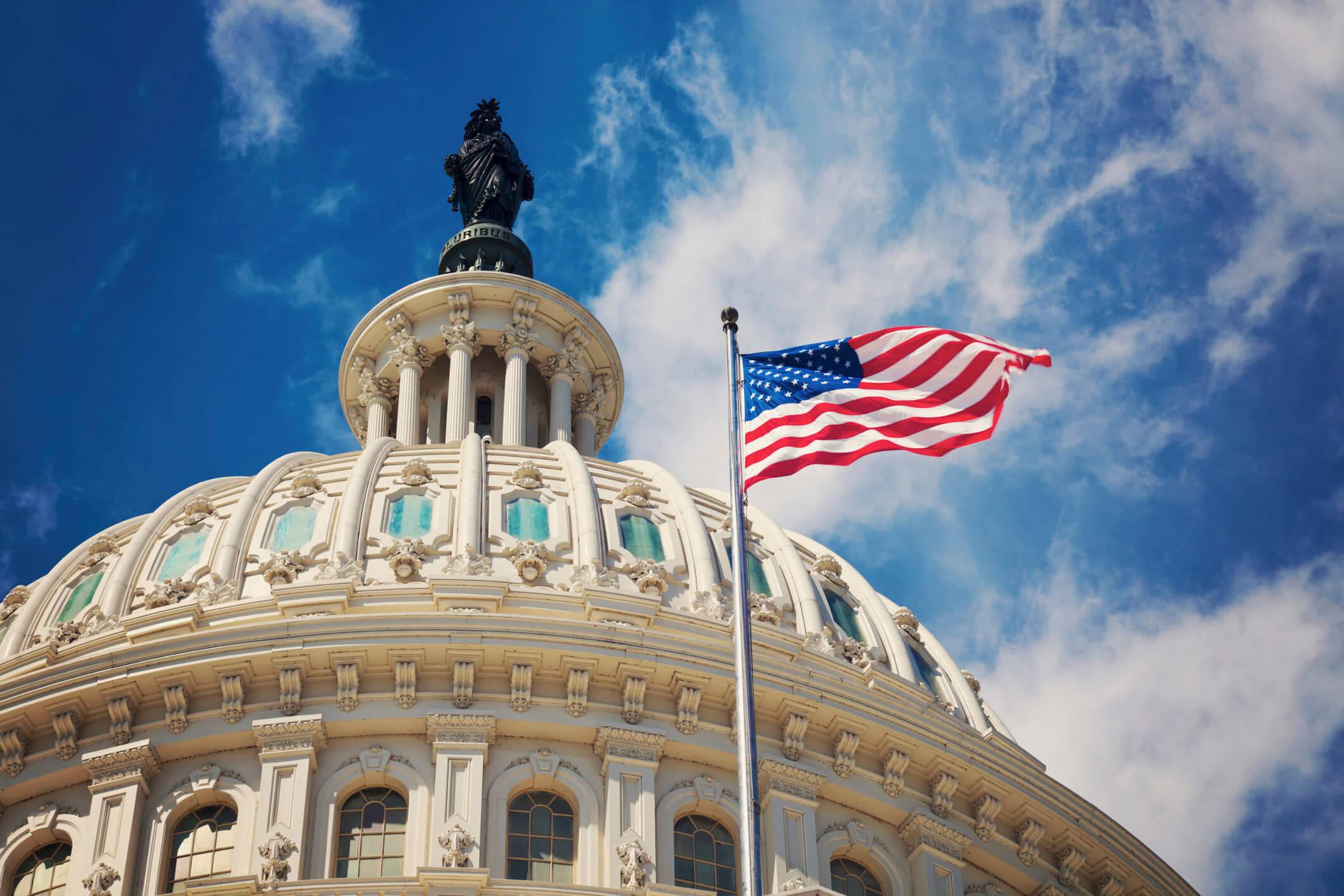
House Returns to D.C., Passes Bill to Avert Government Shutdown. Members of the U.S. House of Representatives were back in Washington, D.C., this week following their August recess, and they got to work quickly, passing a priority bill to extend current federal government funding (originally set to expire on September 30, 2026) through December 11, 2026. President Donald Trump signed the bill into law on September 2, 2026. While this stopgap ensures there won’t be a government shutdown in advance of the November midterm elections, it could portend a messy end-of-year funding battle as the 119th Congress draws to a close.
USCIS Poised to Eliminate Sixty-Day Grace Period. On August 27, 2026, the Office of Information and Regulatory Affairs (OIRA) completed its review of U.S. Citizenship and Immigration Services’ (USCIS) proposal, “Eliminating the Discretionary 60-day Grace Period.” This proposal was not previously published in the Spring Regulatory Agenda, which was issued on July 3, 2026. However, as Jennifer M. Cofer and Maurisa Iacono explain, the proposal’s title suggests that it will amend or rescind a 2017 rule that, among other provisions, granted certain nonimmigrant visa holders a sixty-day period to remain in the United States following their separation from employment. According to the 2017 rule, implemented at the end of the Obama administration, the purpose of the sixty-day period was to “better enable U.S. employers to employ and retain high-skilled workers who are beneficiaries of employment-based immigrant visa … petitions, while increasing the ability of these workers to further their careers by accepting promotions, changing positions with current employers, changing employers, and pursuing other employment opportunities.” USCIS is likely to publish the proposed rule in the Federal Register soon.
House Lawmakers Examine Regulatory Compliance Burdens. The House Committee on Education and the Workforce’s Subcommittee on Workforce Protections held a hearing this week titled “Less Red Tape, More Opportunity: Unleashing American Workers and Job Creators.” According to the opening statement of subcommittee chair Representative Ryan Mackenzie (R-PA), the hearing focused on “barriers that hinder economic growth and stifle private sector employment.” Witnesses addressed current, pressing employment policy matters, such as independent contractors, joint employment, and excessive heat in the workplace, advocated for the finalization of U.S. Department of Labor proposed rules concerning independent contractor and joint-employer status, and called for the advancement of complementary legislation, such as the Modern Worker Empowerment Act (H.R. 1319), the Save Local Business Act (H.R. 4366), and the American Franchise Act (H.R. 5267). Republicans and witnesses also promoted the Heat Workforce Standards Act of 2025 (H.R. 6213), which has been approved by the Education and Workforce Committee and awaits a vote by the full House. While these legislative opportunities may soon be foreclosed to Republicans if Democrats retake the House majority in 2027, the Trump administration is expected to continue to pursue these issues in the regulatory arena.
Sharp Dressed Man. Members of Congress often take pride in and boast about their hometowns and constituents. Some, like Senator Dan Sullivan (R-AK) or Representative Mike Levin (D-CA), even take time to regularly highlight the achievements of local residents. This week, Representative Troy Nehls (R-TX) took to the House floor to honor the life of one of his constituents, ZZ Top drummer Frank Beard, who recently passed away. Nehls described Beard as a friend, “a true Texas legend, Rock & Roll Hall of Famer, and the heartbeat of ZZ Top for more than fifty years.” In 2021, Nehls delivered a similar eulogy following the passing of Beard’s bandmate, bassist Dusty Hill.